Celebrity
Lizabeth Lockhart: A Complete Guide to the Actress, Her Career, Family Legacy, and Lasting Influence


Lizabeth Lockhart is an American actress best known for her appearances in classic television and film during the 1960s and 1970s. Although her acting career was relatively brief, she remains a fascinating figure because of her connection to one of Hollywood’s most respected acting families. As the daughter of celebrated actress June Lockhart and the granddaughter of legendary performers Gene Lockhart and Kathleen Lockhart, Lizabeth inherited a remarkable entertainment legacy that spans multiple generations.
Unlike many performers raised in Hollywood, Lizabeth Lockhart chose a quieter professional path after making several television and film appearances. Even so, her work continues to interest classic television enthusiasts and fans researching the famous Lockhart family. In this article, we explore her early life, acting career, notable screen appearances, famous family background, personal life, and enduring legacy.
Quick Bio
| Category | Details |
|---|---|
| Full Name | June Elizabeth Maloney (Lizabeth Lockhart) |
| Date of Birth | November 21, 1955 |
| Age | 70 (as of 2026) |
| Profession | Former Actress, Corporate Commercial Manager |
| Known For | Acting roles in 1960s–1970s TV and film |
| Parents | June Lockhart, Dr. John Francis Maloney |
| Sibling | Anne Lockhart |
| Child | Christianna Triolo |
| Nationality | American |
| Net Worth | Estimated $400,000–$700,000 |
| Notable Credits | Death Valley Days, Petticoat Junction, Carter Country, Just Tell Me You Love Me |
| Marital Status | Divorced |
| Social Media | None |
Early Life and Hollywood Family Background
Born as June Elizabeth Maloney in New York City on November 21, 1955, Lizabeth Lockhart grew up surrounded by the entertainment industry. Her mother, acclaimed actress June Lockhart, became famous through productions such as Lassie and Lost in Space, while her grandparents, Gene Lockhart and Kathleen Lockhart, were celebrated actors in both film and theater.
Growing up in such an accomplished family meant acting was a natural part of everyday life. Film sets, television studios, rehearsals, and conversations about performance were common experiences during her childhood. This environment gave Lizabeth an early appreciation for storytelling, professionalism, and the discipline required to succeed in Hollywood.
She also shared her family’s passion for acting with her older sister, Anne Lockhart, who later became widely recognized for portraying Lieutenant Sheba in Battlestar Galactica. Together, the sisters represented another generation in one of America’s longest-running acting dynasties.
Beginning an Acting Career
Lizabeth Lockhart entered the entertainment industry at a young age. Early in her career, she appeared under the name June Lockhart Jr., reflecting her close connection to her famous mother.
Her first credited screen appearances came as a child actress in television productions. Like many young performers, these early roles allowed her to gain valuable on-set experience while learning directly from seasoned professionals.
Although she never pursued the same level of public recognition as her mother, Lizabeth demonstrated confidence and natural screen presence. Casting directors appreciated her ability to deliver believable performances despite her young age.
Rather than seeking leading roles, she accepted supporting parts that complemented larger ensemble casts. These performances helped establish her as a capable young actress while allowing audiences to recognize another member of the talented Lockhart family.
Notable Television and Film Appearances
Although Lizabeth Lockhart’s filmography is modest compared to other members of her family, she appeared in several productions that remain familiar to fans of classic American television.
One of her earliest appearances came in Death Valley Days, where she was credited as June Lockhart Jr. This western anthology series introduced many young actors to television audiences and provided valuable experience early in her career.
She later appeared in the beloved sitcom Petticoat Junction, another classic television series that continues to attract nostalgic viewers through reruns and streaming services.
Lizabeth also appeared in Carter Country, a comedy series broadcast during the late 1970s, further expanding her television résumé. Her final notable screen credit came in the 1978 film Just Tell Me You Love Me, where she portrayed a hotel clerk.
While these roles were supporting performances, they showcased her versatility and professionalism across different genres, including comedy, drama, and family entertainment.
The Lockhart Family Legacy in Hollywood
Few American families have contributed to the entertainment industry across as many generations as the Lockhart family. Lizabeth Lockhart represents an important part of this remarkable tradition.
Her grandparents, Gene and Kathleen Lockhart, built distinguished careers during Hollywood’s Golden Age, appearing in numerous acclaimed productions on stage and screen. Their work established a reputation for excellence that continued through future generations.
Her mother, June Lockhart, became one of television’s most recognizable actresses through iconic roles that introduced her to audiences around the world. Her sister, Anne Lockhart, achieved success in television and film, ensuring the family’s artistic legacy continued into another era.
Although Lizabeth’s acting career was shorter, she remains an integral part of this celebrated lineage. Her appearances represent another chapter in a family history defined by talent, professionalism, and dedication to the performing arts.
Personal Life Beyond the Spotlight
Unlike many Hollywood personalities, Lizabeth Lockhart chose to maintain a relatively private life.
According to publicly available records, she married Edward Paul Triolo in 1985, and the couple later divorced. They have a daughter, Christianna Triolo.
Following her acting career, Lizabeth largely stepped away from public attention. She has avoided extensive media interviews and has maintained a low public profile compared to other members of her family.
This privacy has contributed to public curiosity, but it also reflects a conscious decision to separate personal life from Hollywood publicity. Many admirers appreciate this choice, recognizing that not every performer seeks lifelong celebrity.
Why Lizabeth Lockhart Continues to Interest Fans
Interest in Lizabeth Lockhart remains strong for several reasons.
Classic television enthusiasts frequently rediscover her performances while watching vintage series. Film historians researching Hollywood families often encounter her name because of the remarkable achievements of her relatives.
Her story also appeals to audiences interested in second-generation performers who experienced Hollywood differently from their famous parents. Rather than pursuing continuous fame, Lizabeth appears to have embraced a quieter path while still contributing to American television history.
Collectors of classic television memorabilia, genealogy researchers, and entertainment historians continue to document her career because every member of the Lockhart family has played a role in shaping American popular culture.
Career Highlights and Lasting Legacy
Although Lizabeth Lockhart appeared in only a handful of productions, her work remains part of classic American entertainment history.
Some of her career highlights include:
- Child acting roles in popular television productions.
- Appearances under the name June Lockhart Jr.
- Supporting performances in well-known television series.
- A feature film appearance in Just Tell Me You Love Me.
- Membership in one of Hollywood’s most respected acting families.
Her legacy extends beyond the number of acting credits she accumulated. She represents the continuity of a family whose contributions span theater, film, and television across multiple generations.
Today, fans continue discovering her performances through streaming platforms, classic television broadcasts, and entertainment archives. Every appearance offers a glimpse into an era when family traditions often shaped careers in the performing arts.
Conclusion
Lizabeth Lockhart occupies a unique place in Hollywood history. While her acting career was brief, it connected her to one of the entertainment industry’s most distinguished family legacies. From childhood television appearances to supporting roles in classic productions, she demonstrated professionalism and natural talent while contributing to American television during an important period.
Her decision to live largely outside the public spotlight has only increased interest among classic television fans and historians. Whether remembered as the daughter of June Lockhart, the granddaughter of Gene Lockhart, or an actress in her own right, Lizabeth Lockhart remains an enduring figure whose story reflects both Hollywood tradition and personal independence.
Frequently Asked Questions
Who is Lizabeth Lockhart?
Lizabeth Lockhart is an American actress known for appearances in Death Valley Days, Petticoat Junction, Carter Country, and Just Tell Me You Love Me.
What is Lizabeth Lockhart’s birth name?
Her birth name is June Elizabeth Maloney.
Who are Lizabeth Lockhart’s parents?
Her mother is acclaimed actress June Lockhart, and her father is Dr. John Francis Maloney.
Is Lizabeth Lockhart related to Anne Lockhart?
Yes. Anne Lockhart is her older sister.
Why is Lizabeth Lockhart still remembered?
She is remembered for her television appearances and for being part of one of Hollywood’s most celebrated multi-generational acting families.

The name Jeannine Belleguic has attracted increasing attention in online searches, but the available evidence points to a story that is very different from a conventional celebrity biography. Rather than being widely known for entertainment, politics, business, or another public career, Jeannine Belleguic appears in publicly accessible records primarily through French civil records, family notices, memorial information, and funeral announcements.
The strongest records identify her as Jeannine Belléguic, née Bleuzen, with the birth name Jeannine Josephine Annick Bleuzen. Available records place her birth in Quimperlé, Finistère, France, on May 28, 1931, and record her death on April 18, 2025, at the age of 93. Her funeral was held in Quimperlé on April 25, 2025.
Because relatively little information about her private life is publicly documented, it is important to separate confirmed information from claims that have simply been repeated across biography websites.
Who Was Jeannine Belleguic?
Jeannine Belleguic was a French woman associated with Quimperlé and the Brittany region of western France. Her online presence appears to have developed largely after the publication and indexing of memorial and death information rather than through a long public career.
According to the available records, her formal French name appears as Jeannine Belléguic, née Bleuzen. The French term née indicates a woman’s birth or maiden surname. This explains why both Bleuzen and Belleguic/Belléguic appear in records referring to the same individual.
The available evidence does not establish her as a nationally recognized celebrity, entertainer, politician, influencer, or other major public personality. Instead, her documented story is primarily connected with family history, local community, civil records, and remembrance.
That distinction matters when researching a name online. A person can appear in many search results without having been famous during their lifetime. Memorial notices and genealogical records can create a substantial digital footprint for someone who otherwise lived a private life.
Early Life, Birth Name, and Connection to Brittany
Available civil information identifies Jeannine’s birth date as May 28, 1931, and her birthplace as Quimperlé, France, in the Finistère department of Brittany. Some sources give her full birth name as Jeannine Josephine Annick Bleuzen.
Quimperlé is a historic community in Brittany, an area known for its distinctive French and Breton cultural heritage. Jeannine’s records are strongly connected with this part of western France, making geography an important part of understanding her documented biography.
However, there is limited reliable public information about her childhood. The sources reviewed do not provide a detailed account of her parents, early education, childhood interests, or teenage years.
This lack of information should not be interpreted as evidence that those parts of her life were unimportant. Rather, it reflects the fact that she appears to have been a private individual whose personal history was not extensively published online.
For that reason, a responsible biography should avoid inventing details about her childhood simply to make the story appear more complete.
Family Name and Personal Life
The surname Bleuzen is particularly important when researching Jeannine Belleguic. Her records identify Bleuzen as her birth or maiden surname, while Belléguic/Belleguic became the surname associated with her later life.
Some publicly available biography pages also identify her in relation to Jean-Charles Belleguic, although the amount of independently documented information about her marriage and wider family life remains limited.
Family notices provide a more reliable indication that her life was connected to a multigenerational family in the Brittany area. Nevertheless, details about her children, grandchildren, relationships, home life, and personal interests should not be expanded beyond what the underlying records establish.
This is particularly important because many online biography pages repeat information from one another. Repetition is not the same as independent verification. When researching a private individual, primary or near-primary records carry considerably more weight than multiple websites repeating identical claims.
Jeannine Belleguic’s Career and Profession
One of the least certain parts of Jeannine Belleguic’s biography is her professional background.
Unlike public figures with company biographies, interviews, published work, professional directories, or extensive media coverage, there is no strong body of independent evidence establishing a specific career for her.
Some websites have claimed that Jeannine worked in psychology or neuropsychology-related fields. However, the sources reviewed do not provide sufficient independent evidence to establish those claims as confirmed facts. One recent investigation specifically noted that the alleged professional background could not be independently corroborated through the stronger records examined.
This does not prove that she never worked in such a field. A person can have a long professional career without leaving a substantial online record, particularly when much of that career occurred before the modern internet.
The most accurate conclusion is therefore that Jeannine Belleguic’s profession is not reliably documented in the strongest publicly available sources reviewed.
This distinction is important because a biography should not turn an unsupported online statement into an established fact.
Was Jeannine Belleguic a Celebrity or Public Figure?
The available evidence does not establish Jeannine Belleguic as a celebrity or nationally recognized public figure.
There is no strong record of a major entertainment career, political position, internationally recognized business role, extensive interview history, or comparable public profile. Instead, her name appears primarily in obituary, memorial, funeral, and civil records.
Why, then, can her name be found on numerous websites?
The answer is largely connected with modern search engines. Once a death notice or memorial record becomes indexed, other websites may publish biography-style articles based on that information. The resulting number of pages can make a person appear more famous than the underlying evidence suggests.
Jeannine’s case demonstrates why search visibility should not automatically be confused with celebrity status.
For genealogy researchers, this is actually useful. A searchable memorial record can help connect a person’s name with a particular place, family name, date, and historical period.
Death, Funeral, and Final Records
According to the available records, Jeannine Belleguic died on April 18, 2025, at the age of 93. Records connect her death with Lorient, while the funeral arrangements were centered on Quimperlé.
Her funeral took place on April 25, 2025, at Notre-Dame Church in Quimperlé. Some memorial sources also report burial at Saint-David Cemetery in the Quimperlé area.
These records form the clearest documented endpoint of her publicly available biography.
Rather than a large public memorial associated with a famous career, the information reflects a local family and community remembrance. The funeral details help explain why her name continues to appear in searches even though she did not have the type of public profile normally associated with celebrity biographies.
The records also provide an important historical connection to Quimperlé and Brittany, the region with which her life was closely associated.
A Different Jeannine Belleguic in French Records
Researching names requires particular care because different people can share the same name.
Another Jeannine Belleguic appears in French records, but the available details indicate that she was a different person. That individual was Jeannine Gisèle Marcelle Belleguic, born in Bordeaux in 1941 and deceased in 1987 at the age of 46.
These details differ substantially from the woman born in Quimperlé in 1931 who died in 2025 at age 93.
The distinction is important for genealogy and biographical research. A shared name is not sufficient evidence that two records belong to one individual. Researchers should compare birth dates, birthplaces, family names, locations, and other identifying information before combining records.
This also explains why online searches for “Jeannine Belleguic” can sometimes produce apparently conflicting information.
Frequently Asked Questions About Jeannine Belleguic
Who was Jeannine Belleguic?
Jeannine Belleguic was a French woman associated with Quimperlé, Brittany, whose publicly available information comes mainly from civil, memorial, family, and funeral records.
What was Jeannine Belleguic’s birth name?
Her records identify her as Jeannine Belléguic, née Bleuzen. Some sources give her full birth name as Jeannine Josephine Annick Bleuzen.
When was Jeannine Belleguic born?
Available records give her date of birth as May 28, 1931, in Quimperlé, Finistère, France.
When did Jeannine Belleguic die?
Records indicate that she died on April 18, 2025, at the age of 93.
Where was her funeral held?
Her funeral was held on April 25, 2025, at Notre-Dame Church in Quimperlé.
Was Jeannine Belleguic a famous person?
The available evidence does not establish her as a major public figure or celebrity. Her searchable public record is primarily associated with family and memorial information.
What was Jeannine Belleguic’s profession?
Her profession is not reliably established by the strongest publicly available records reviewed. Claims about psychology or neuropsychology should therefore be treated as unverified rather than established biography.
What was Jeannine Belleguic’s net worth?
There is no reliable public information establishing a net worth for Jeannine Belleguic. Because she appears to have lived privately, assigning a specific financial figure would be speculative.
Conclusion
The available evidence presents Jeannine Belleguic as a private French woman whose life was closely connected with Quimperlé and Brittany, rather than as a conventional celebrity biography subject. Records identify her birth name as Jeannine Josephine Annick Bleuzen, give her birth date as May 28, 1931, and record her death on April 18, 2025, at age 93.
Her funeral in Quimperlé on April 25, 2025, provides another well-documented part of her public record. Beyond these facts, considerably less information is reliably established about her education, profession, personal interests, and private life.
The most important point when researching Jeannine Belleguic is therefore accuracy. Some online biographies contain additional claims, but those claims should be evaluated individually rather than accepted simply because they appear on multiple websites. The documented record provides a concise but meaningful picture of a woman whose name remains connected to family, place, Brittany, and remembrance.
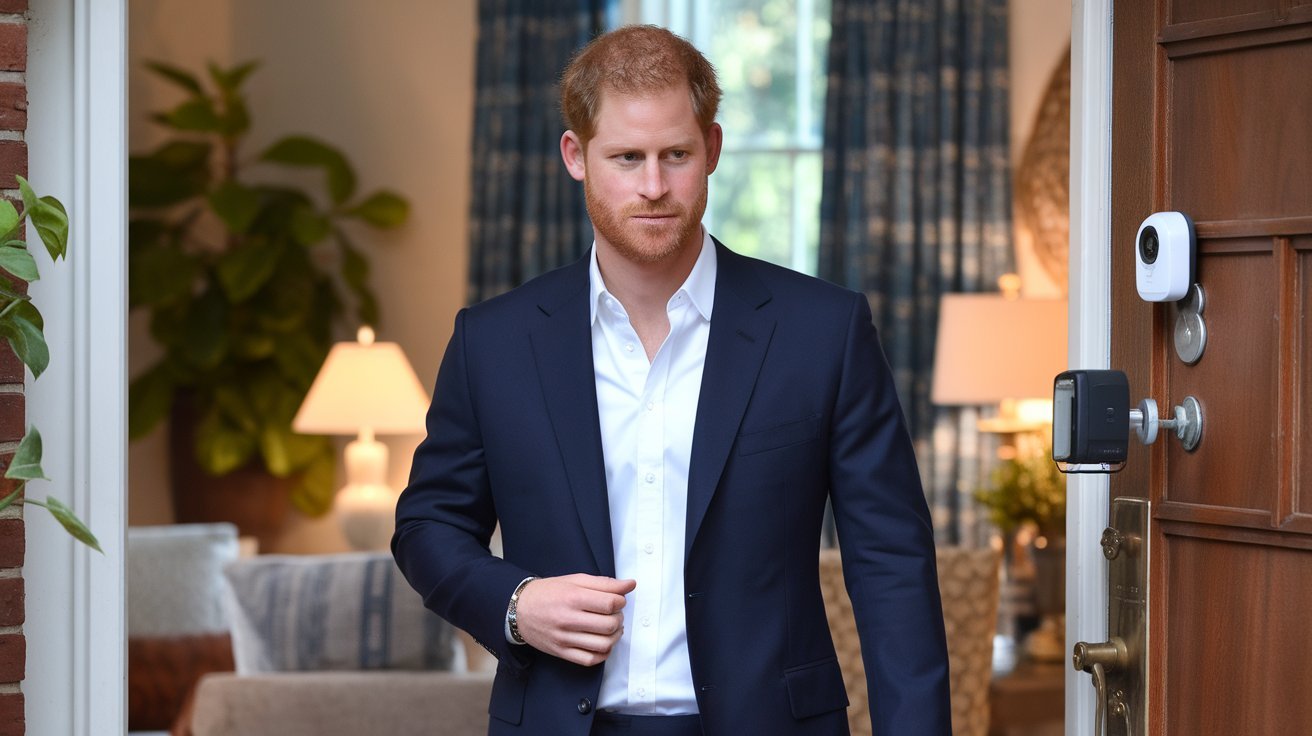
The phrase “Prince Harry doorstep video doorbell” became widely associated with footage from May 2025 showing the Duke of Sussex approaching homes on a residential London street while apparently trying to locate a friend’s house. The footage was captured by a doorbell camera, and the unusual encounter quickly attracted attention because the person appearing at the door was one of the world’s most recognizable public figures.
The incident is sometimes confused with an older 2019 video in which Prince Harry and Ed Sheeran appeared together in a humorous World Mental Health Day campaign. In that earlier video, Sheeran rang a doorbell at a royal residence before Harry answered the door. The two incidents are separate and took place several years apart.
What Happened in the Prince Harry Doorbell Video?
The widely circulated doorstep footage dates to May 2025, when Prince Harry was in London. According to contemporary reporting, a doorbell camera recorded him approaching properties on a residential street while he was reportedly looking for a friend’s home.
The Standard reported that Harry was seen wearing a blue suit without a tie and holding a phone as he approached several properties. The report said he appeared to have tried at least three homes before locating the correct address.
Because doorbell cameras automatically record people approaching a property, the encounter was captured without being a planned public appearance. The footage subsequently became a subject of media coverage and social-media discussion.
The event was unusual primarily because it showed a very recognizable public figure engaging in an ordinary activity that would normally attract little attention: walking along a residential street and looking for an address.
Why Did the Prince Harry Doorstep Footage Attract So Much Attention?
The interest surrounding the footage was largely connected to the contrast between Harry’s public profile and the ordinary nature of the situation.
Doorbell-camera footage has become a common source of unexpected videos because modern smart doorbells can automatically record people approaching a property. In this case, the appearance of Prince Harry on a residential security camera turned an otherwise routine doorstep encounter into international entertainment-news material.
Contemporary reports also connected the incident with Harry’s wider discussions about security during his visits to the United Kingdom. At the time, his legal dispute concerning publicly funded security arrangements had received substantial media attention. The Standard’s report discussed the doorstep footage alongside those security-related developments.
It is important, however, to separate the documented footage from speculation surrounding it. The camera footage establishes that Harry approached homes on the street; it does not independently establish every interpretation or motive subsequently attributed to the incident.
Was Prince Harry Actually Looking for a Friend’s House?
Contemporary reporting said that Harry was looking for a friend’s home. The Standard reported that he approached multiple properties before apparently finding the intended destination.
That description is important because social-media posts can sometimes remove context from short video clips. A short doorbell recording may show a person walking toward a door, but it does not necessarily explain everything that happened before or afterward.
According to the reporting available about the incident, Harry was visiting London and was attempting to locate a friend’s residence. The footage therefore appears to document an address-finding mishap rather than a planned public appearance.
The fact that several homes were reportedly approached is what made the incident particularly memorable. For viewers accustomed to seeing members of the royal family at official engagements, seeing Harry appear on an ordinary residential doorbell camera was a striking change of setting.
The Difference Between the 2025 Doorbell Footage and the 2019 Ed Sheeran Video
There is another famous Prince Harry doorbell video, but it should not be confused with the 2025 incident.
In October 2019, Ed Sheeran released a humorous video featuring Prince Harry as part of a World Mental Health Day campaign. In the opening sequence, Sheeran approaches a door and rings the doorbell. The doorbell reportedly plays the opening notes of “God Save the Queen”, after which Harry answers the door.
The 2019 video was intentionally produced as a public campaign video, whereas the 2025 footage came from a residential doorbell camera and was subsequently reported by news organizations.
The 2019 collaboration ultimately promoted a message encouraging people to look after friends, strangers, and others who might be experiencing difficulties. ITV reported that the video was connected to World Mental Health Day and encouraged people to talk about how they were feeling and to seek help when necessary.
This distinction explains why searches for “Prince Harry doorbell video” can produce two completely different stories.
What the Doorbell Camera Reveals—and What It Does Not
A doorbell-camera clip provides a limited perspective. It can show when someone approaches a property, what they appear to do at the entrance, and sometimes what happens immediately afterward.
It does not necessarily reveal the complete circumstances surrounding the visit.
In the 2025 case, reports described Harry as searching for a friend’s address. The footage itself became the visual element of the story, while the surrounding circumstances came from media reporting.
This is an important consideration when watching short viral videos. The video and the interpretation of the video are not necessarily the same thing. A responsible account should distinguish what is visibly recorded from what has been reported or inferred by commentators.
The incident also demonstrates how smart-home technology has changed modern privacy and news coverage. A celebrity does not necessarily need to be photographed by a professional photographer to appear in public coverage. A residential doorbell camera can record an unexpected encounter, and the resulting clip can spread rapidly online.
Why the Story Remains Relevant in 2026
The phrase “Prince Harry doorstep video doorbell” continues to attract searches because the footage combines celebrity, royal history, smart-home technology, and an unusual everyday encounter.
Harry also returned to Britain for public appearances in September 2026. Reuters reported that he made public appearances in the UK after a period away, including appearances connected with the Invictus Games and Save the Children.
That renewed public attention helps explain why older footage can resurface in search results and social-media discussions. However, the doorstep-camera incident itself dates from May 2025, not 2026.
For readers researching the subject today, establishing the date is therefore essential. The 2025 footage should not be presented as a newly recorded 2026 video.
Frequently Asked Questions About the Prince Harry Doorstep Video
What is the Prince Harry doorstep video?
It generally refers to doorbell-camera footage from May 2025 showing Prince Harry approaching homes on a London residential street while reportedly looking for a friend’s address.
Was Prince Harry caught on a Ring doorbell?
Reports and online video descriptions identify the footage as coming from a Ring-style doorbell camera. The important point is that it was residential doorbell-camera footage rather than an official royal recording.
Why was Prince Harry knocking on different doors?
Contemporary reporting said he was looking for a friend’s house and approached several properties before finding the intended address.
Is the Ed Sheeran doorbell video the same incident?
No. The Ed Sheeran video was from 2019 and was a planned World Mental Health Day campaign. Sheeran rang a doorbell and Harry answered the door as part of the humorous video.
When did the famous Prince Harry doorstep footage happen?
The widely reported residential doorbell-camera incident occurred in May 2025 during one of Harry’s visits to the United Kingdom.
Is the footage from 2026?
No. Although the subject may appear in 2026 searches, the commonly referenced doorstep footage was recorded and reported in 2025. Harry’s separate UK public appearances in September 2026 are a later development.
Final Thoughts
The Prince Harry doorstep video doorbell story is an unusual example of how everyday smart-home technology can capture a moment involving a globally recognized public figure. The 2025 footage showed Harry approaching residential properties while reportedly trying to find a friend’s home, creating an unexpected contrast between his public status and an ordinary doorstep situation.
At the same time, the subject is easily confused with the 2019 Prince Harry and Ed Sheeran doorbell video, which was a deliberately produced World Mental Health Day campaign. Keeping these two events separate is essential when researching the topic.
For anyone searching for the viral doorstep footage in 2026, the key facts are straightforward: the residential doorbell incident dates to May 2025, it involved Harry reportedly looking for a friend’s address, and it is separate from the 2019 Ed Sheeran video.
The search phrase “Iryna Zarutska video YouTube” became widely associated with surveillance footage and news coverage following the death of 23-year-old Ukrainian woman Iryna Zarutska on a Charlotte, North Carolina, light-rail train in August 2025. Because graphic footage circulated widely online, searches for the video have also produced news reports, commentary, reposts, and misleading clips that are unrelated to the case. Understanding what is actually documented is therefore important when searching for information in 2026.
Zarutska was fatally stabbed while riding Charlotte’s Lynx Blue Line on August 22, 2025, according to authorities and court-related reporting. The incident later attracted national attention after surveillance footage became public.
What Happened to Iryna Zarutska?
Iryna Zarutska was a 23-year-old Ukrainian woman living in Charlotte. According to an affidavit reported by ABC News, she boarded the Lynx Blue Line shortly before 10 p.m. on August 22, 2025, and sat in an aisle seat in front of a man identified by authorities as Decarlos Brown Jr.
The affidavit described the attack as occurring only a few minutes after Zarutska entered the train. Authorities said there appeared to be no interaction between Zarutska and Brown before the attack. Brown was subsequently arrested and charged with first-degree murder at the state level. A federal charge was later filed in connection with the death.
The case remains a legal matter, so descriptions of the allegations should be distinguished from a final judicial determination. As of September 2026, reporting indicates that Brown had been found incompetent to stand trial in the federal case during the summer of 2026, and a recently unsealed transcript provided additional information about the competency proceedings.
What Does the Iryna Zarutska Video Show?
The Iryna Zarutska video that circulated online was surveillance footage from inside the Charlotte light-rail system. News organizations reported that the footage showed the moments surrounding the attack and helped establish the timeline investigators were examining.
ABC News reported that Zarutska entered the train at approximately 9:46 p.m., while the attack occurred around 9:50 p.m. According to the affidavit cited by ABC, Brown allegedly removed a knife, unfolded it, stood up, and struck Zarutska. The footage subsequently became a major part of public discussion about the case.
Because the footage contains a fatal attack, reproducing or seeking out graphic versions is different from watching a conventional news report. News coverage may provide context without requiring viewers to seek out disturbing raw footage.
The White House also published a video concerning Iryna Zarutska on September 16, 2026, demonstrating how extensively the case has continued to receive national attention.
Why Did the Video Become So Widely Shared?
The surveillance footage became particularly significant because it appeared to provide a visual record of the incident rather than relying solely on witness accounts or written descriptions. As clips circulated across social-media platforms, the case received attention well beyond Charlotte.
However, the rapid spread of video also created problems involving context, privacy, and misinformation. Some posts combined authentic images or footage from the Zarutska case with unrelated courtroom videos or captions that falsely claimed to show events connected to the prosecution.
For people searching for Iryna Zarutska video YouTube, it is therefore important to distinguish original reporting and verified surveillance footage from edited social-media compilations.
Beware of Fake Iryna Zarutska Court Videos
One of the most important misinformation issues surrounding the case involved a video supposedly showing the accused killer receiving a final court sentence. Fact-checkers determined that the courtroom footage was not from the Iryna Zarutska case.
Lead Stories reported that a viral montage incorrectly presented unrelated courtroom footage as the final verdict in Brown’s case. The courtroom footage actually came from a 2016 Ohio case involving another man, Jaleel Smith-Riley. The fact-check also noted that, at the time of its November 2025 review, there had been no trial verdict in the Zarutska case.
AFP similarly reported that the courtroom footage had been falsely connected to the Zarutska case and originated from an unrelated case in Ohio.
This is an important lesson for anyone searching YouTube: a video title or thumbnail is not proof that the footage depicts the event described in the title. Older courtroom recordings can be repackaged with new captions to make them appear connected to current cases.
Where Can Viewers Find Reliable Video Coverage?
People looking for legitimate information about the Iryna Zarutska case should prioritize established news organizations, official government sources, and court-related reporting rather than anonymous uploads or sensational compilations.
ABC News published video coverage explaining the circumstances surrounding Zarutska’s death, while WBTV has also reported extensively on surveillance footage and the arrest of the man accused in the case.
The White House has also published an official video concerning Zarutska.
When searching YouTube, viewers should check the publisher, upload date, description, and surrounding reporting. A trustworthy video should clearly identify its source and explain whether the footage is original surveillance, news reporting, courtroom material, or commentary.
What Is Known About the Legal Case in 2026?
The legal proceedings have continued beyond the initial state murder charge. According to WBTV’s September 2026 reporting, Brown faces both state and federal charges related to Zarutska’s death. The federal charge concerns an act causing death on a mass transportation system.
A federal competency proceeding also became significant during 2026. WBTV reported that Brown was found incompetent to stand trial during the summer and that a recently unsealed transcript contained statements from the federal competency hearing. These developments concern the legal process and should not be confused with a final determination of guilt or innocence.
The distinction matters because online videos sometimes describe a final verdict or sentence even when court proceedings have not reached that stage. Readers should rely on current court reporting when checking the status of the case.
Iryna Zarutska Video: What Searchers Should Remember
The phrase “Iryna Zarutska video YouTube” can lead to many different types of material, including legitimate news reports, surveillance-footage discussions, social-media reposts, commentary, and misinformation. The underlying event is documented: Zarutska was fatally stabbed on a Charlotte light-rail train in August 2025, and surveillance footage subsequently became central to public reporting about the case.
At the same time, not every video claiming to show the case is authentic. In particular, fact-checkers identified unrelated 2016 courtroom footage that had been falsely presented as material from the Zarutska prosecution.
For anyone researching the story in 2026, the safest approach is to use established news sources and official publications, verify the date and origin of each video, and avoid assuming that a viral title or edited clip represents the complete story. The case remains a developing legal matter, so current reporting should be checked whenever information about hearings, competency proceedings, or future court dates is presented.

Tozymagazine.com: Complete Guide to Tozy Magazine in 2026

Jeannine Belleguic: Biography, Family, Life, Death, and Public Records in 2026

Poieno: Meaning, Origin, Creative Concept, Uses, and What It Really Means in 2026

Meinhard Schwarzenegger: The Untold Story of Arnold Schwarzenegger’s Older Brother

What Does TB Mean in Text? Complete Meaning, Uses, Examples, and Common Interpretations (2026 Guide)

PushWiki com: A Complete Guide to the Knowledge Platform, Features, and User Experience
 Celebrity3 months ago
Meinhard Schwarzenegger: The Untold Story of Arnold Schwarzenegger’s Older Brother
- Blog3 months ago
What Does TB Mean in Text? Complete Meaning, Uses, Examples, and Common Interpretations (2026 Guide)
- Business3 months ago
PushWiki com: A Complete Guide to the Knowledge Platform, Features, and User Experience
- Business3 months ago
BacktoFrontShow Pricing: Complete Guide to Plans, Features, Value, and Cost in 2026
- Celebrity3 months ago
Karen Mendes: Biography, Career, Achievements, Personal Life, and Lasting Influence
- Blog3 months ago
Arial or Aerial? Understanding the Difference, Correct Usage, Meaning, and Common Mistakes (2026 Guide)
- Blog3 months ago
Busy Things: A Complete Guide to Understanding, Managing, and Making the Most of a Busy Life
- Blog3 months ago
Blog ThriftyEvents.net: The Ultimate 2026 Guide to Budget-Friendly Event Planning, AI-Powered Content Creation