Tech
How to Use 1.5F8-P1UZT: A Complete 2026 Guide to Setup, Features, AI Integration, and Digital Productivity

As technology continues to evolve in 2026, users frequently encounter unique product identifiers, software versions, hardware model numbers, and activation codes such as 1.5F8-P1UZT. How to Use 1.5F8-P1UZT refers to a software module, firmware version, device configuration, testing environment, or internal system identifier, understanding the correct setup process and best practices can improve productivity and reduce technical issues.
Modern users also benefit from AI-powered productivity tools that simplify documentation, troubleshooting, and content creation. By combining ChatGPT, Meta AI, Picfont, and 11zon Image Compressor, professionals can create comprehensive guides, attractive visuals, and optimized digital content that enhances both usability and search engine performance.
This complete 2026 guide explains practical approaches to using 1.5F8-P1UZT, outlines recommended workflows, and explores how AI-powered tools support efficient digital documentation.
Understanding 1.5F8-P1UZT
1.5F8-P1UZT appears to be a technical identifier, version number, configuration code, or product reference rather than a consumer-facing product name. Similar identifiers are commonly used for:
- Software builds
- Firmware releases
- Hardware revisions
- Configuration profiles
- Internal product references
- Development environments
- System components
- Enterprise deployment packages
Before using any identifier like 1.5F8-P1UZT, it is important to verify its purpose within the documentation supplied by the relevant developer, manufacturer, or software provider.
Using the correct version or configuration ensures compatibility and helps avoid installation errors or unexpected behavior.
Preparing to Use 1.5F8-P1UZT
Successful implementation begins with proper preparation.
Before working with 1.5F8-P1UZT, verify the following:
- System compatibility
- Operating system version
- Available storage space
- Internet connectivity (if required)
- Administrator permissions
- Latest software updates
- Backup of existing configurations
- Required dependencies
Preparing your system beforehand minimizes interruptions during installation or configuration.
It is also recommended to create a restore point or backup whenever modifying important software environments.
Step-by-Step Guide to Using 1.5F8-P1UZT
Although the exact function of 1.5F8-P1UZT depends on its intended application, a general workflow includes the following steps.
Step 1: Obtain the Correct Package
Download the appropriate installation files or configuration package from the official source.
Step 2: Verify Integrity
Check version numbers and verify that the downloaded files have not been corrupted.
Step 3: Install or Configure
Follow the official installation procedure or import the required configuration settings.
Step 4: Restart if Required
Many software updates and firmware installations require restarting the system.
Step 5: Validate Functionality
Confirm that all features operate correctly after installation by running available diagnostics or testing the intended functionality.
Documenting each step simplifies future maintenance and troubleshooting.
How ChatGPT and Meta AI Improve Technical Documentation
Artificial Intelligence has transformed technical writing in 2026. Instead of creating documentation manually, professionals increasingly rely on ChatGPT and Meta AI.
ChatGPT for Technical Writing
ChatGPT helps create:
- SEO-friendly technical articles
- User manuals
- Installation guides
- Troubleshooting documentation
- Frequently Asked Questions (FAQs)
- Product documentation
- Knowledge base articles
- Training materials
AI-assisted writing improves consistency while reducing documentation time.
Meta AI for Creative Assistance
Meta AI supports:
- Workflow planning
- Visual concepts
- Documentation organization
- Training material development
- Presentation planning
- Marketing content
- User engagement strategies
Together, ChatGPT and Meta AI simplify communication between technical teams and end users.
Creating Technical Graphics with Picfont
Visual documentation improves user understanding. Picfont allows users to add professional typography to screenshots, diagrams, and instructional images.
Common applications include:
- Installation screenshots
- Software tutorials
- Training guides
- Workflow diagrams
- Educational graphics
- Product documentation
- Website illustrations
- Social media educational posts
Professionally labeled images reduce confusion and improve learning outcomes.
Optimizing Documentation Images with 11zon Image Compressor
Technical websites frequently contain screenshots and diagrams that can increase page size if not optimized.
The 11zon Image Compressor helps compress images while maintaining readability.
Benefits of Compression
- Faster website loading
- Better mobile performance
- Improved Core Web Vitals
- Reduced storage usage
- Lower bandwidth consumption
- Enhanced SEO
- Better reader experience
Optimized documentation improves accessibility while maintaining professional quality.
Best Practices for Managing Technical Configurations
When working with identifiers such as 1.5F8-P1UZT, following best practices improves reliability and reduces maintenance challenges.
Recommended practices include:
- Document every configuration
- Keep version histories
- Maintain backups
- Test before deployment
- Verify compatibility
- Monitor system performance
- Apply security updates
- Follow official documentation
These practices help maintain stable and secure digital environments.
The Future of AI-Assisted Technical Support
Artificial intelligence continues to reshape technical support and documentation. Future developments may include:
- AI-generated troubleshooting
- Intelligent installation assistants
- Automated documentation updates
- Predictive maintenance
- Voice-guided technical support
- Cloud-based configuration management
- Real-time diagnostics
- Personalized technical recommendations
These innovations will simplify complex technical workflows while improving productivity and reducing support costs.
Conclusion
How to Use 1.5F8-P1UZT appears to be a technical identifier used for a specific software, firmware, configuration, or system component. While its exact purpose depends on the product or platform it belongs to, following structured installation procedures, maintaining proper documentation, and verifying compatibility are essential for successful implementation.
By combining ChatGPT for documentation, Meta AI for workflow planning, Picfont for instructional graphics, and 11zon Image Compressor for image optimization, organizations and technical professionals can create comprehensive, user-friendly resources that improve productivity and website performance.
As digital technologies continue advancing throughout 2026, integrating AI-powered tools into technical documentation and support workflows will remain a valuable strategy for improving efficiency, accuracy, and user experience.
Frequently Asked Questions (FAQ)
What is 1.5F8-P1UZT?
1.5F8-P1UZT appears to be a technical identifier, software version, firmware reference, or configuration code. Its exact purpose depends on the product or system it belongs to.
How do I install 1.5F8-P1UZT?
Installation procedures vary depending on the associated software or hardware. Always follow the official documentation provided by the relevant developer or manufacturer.
Can ChatGPT help create technical documentation?
Yes. ChatGPT can assist with user manuals, installation guides, troubleshooting articles, FAQs, and other technical content.
What is Meta AI used for?
Meta AI supports brainstorming, workflow organization, documentation planning, creative content development, and educational materials.
Why should I use Picfont?
Picfont helps create professional instructional graphics by adding clear typography to screenshots and diagrams.
How does 11zon Image Compressor improve documentation websites?
It compresses screenshots and images while preserving quality, improving page speed, mobile performance, SEO, and user experience.
Why is documentation important for technical systems?
Well-organized documentation simplifies installation, troubleshooting, maintenance, and future updates while reducing support requests.
What is the future of AI in technical documentation?
Future AI technologies will provide automated troubleshooting, intelligent installation assistants, predictive maintenance, cloud-based documentation management, and personalized technical support for users and organizations.

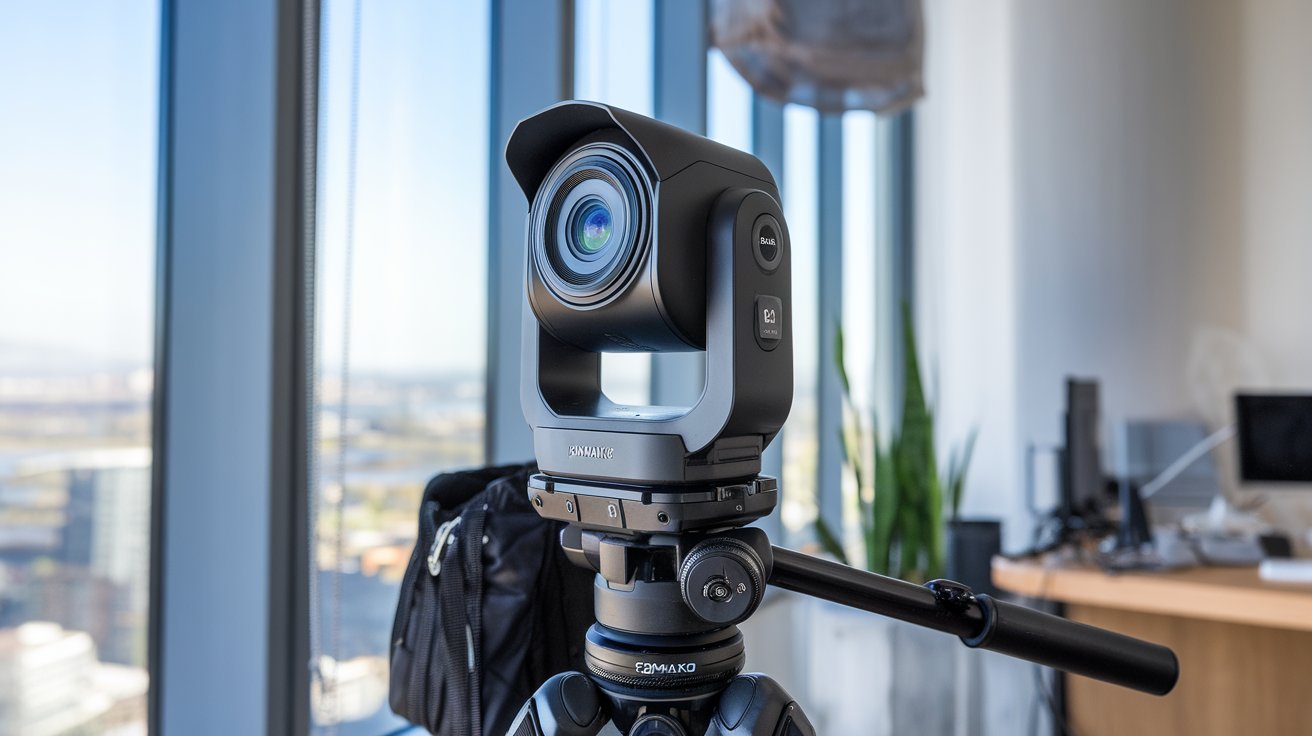
The FoMaKo K20UH 4K HDMI AI Auto-Tracking PTZ Camera is designed for professional and advanced video-production environments where high-resolution imaging, remote camera movement, optical zoom, and automated subject tracking are important. It combines 4K video output, 20x optical zoom, AI humanoid tracking, HDMI, USB 3.0, IP streaming, and PTZ control in one camera platform.
FoMaKo positions the K20UH for applications including church services, worship streaming, education, conferences, broadcasting, live events, video conferencing, lecture capture, telemedicine, and studio production. The manufacturer lists support for resolutions up to 3840 × 2160 at 30fps, while the camera’s network and USB capabilities provide multiple ways to integrate it into modern production systems.
What Is the FoMaKo K20UH 4K PTZ Camera?
The FoMaKo K20UH is a remotely controlled PTZ (Pan-Tilt-Zoom) camera built around a high-definition CMOS sensor and a 20x optical zoom lens. PTZ functionality allows operators to control the camera’s horizontal movement, vertical movement, and zoom without physically touching the camera.
The camera supports a ±170° pan range and a -30° to +90° tilt range, allowing it to cover a broad area. Pan speed can be adjusted from approximately 0.1° to 100° per second, while tilt speed ranges from 0.1° to 45° per second. It also supports up to 255 camera presets, with preset accuracy specified at approximately ±0.1°.
This makes the K20UH especially useful in environments where a camera needs to move between multiple predefined positions, such as a stage, classroom, church platform, conference room, or auditorium.
4K Video, Sensor, and 20x Optical Zoom
One of the most important features of the FoMaKo K20UH is its 4K imaging capability. The camera can produce 3840 × 2160 video at up to 30fps, while also supporting Full HD modes at higher frame rates, including 1080p60.
The current product information identifies a 1/2.8-inch Sony CMOS sensor, while FoMaKo’s detailed specifications list resolutions and imaging modes designed for professional video applications. The camera uses a 20x optical zoom lens and additionally provides 15x digital zoom. Its field of view ranges from approximately 60° at the wide end to 3.5° at the narrow end, making it possible to capture both wider scenes and distant subjects.
The optical zoom is particularly useful in large rooms. Instead of physically moving the camera closer to a speaker or performer, an operator can zoom into the subject while maintaining a fixed camera position.
The camera also incorporates autofocus, manual focus, white-balance controls, exposure settings, backlight compensation, and 2D/3D digital noise reduction. FoMaKo specifies a signal-to-noise ratio of at least 50 dB in its technical information.
AI Auto-Tracking and Intelligent Subject Control
The AI auto-tracking system is one of the K20UH’s defining features. FoMaKo describes its newer implementation as a third-generation AI tracking system, designed to recognize and follow a person without requiring an operator to manually control every camera movement.
The system can provide different tracking approaches, including real-time tracking and regional tracking. According to FoMaKo, users can adjust tracking-related parameters such as tracking mode, sensitivity, figure size, character position, and the action taken when a target is lost. A person can also be selected through the camera’s web interface.
This can be particularly valuable for lecturers, pastors, presenters, instructors, performers, and speakers who move around during a production.
AI tracking does not eliminate the need for good camera placement. The best results still depend on adequate lighting, an unobstructed subject, sensible camera positioning, and appropriate tracking settings. However, automated tracking can significantly reduce the workload for a small production team.
HDMI, USB, Network Streaming, and NDI
Connectivity is another major advantage of the FoMaKo K20UH. The camera supports HDMI, LAN, and USB 3.0 video outputs, with PoE and NDI functionality available depending on the specific configuration.
Its HDMI output supports 4K at 30fps and 1080p modes up to 60fps. USB 3.0 provides additional compatibility for computer-based production and conferencing systems.
For network-based production, the K20UH supports protocols including RTSP, RTMP, RTMPS, SRT, ONVIF, VISCA over IP, IP VISCA, and GB/T28181. H.264 and H.265 compression are supported for network video, helping production systems balance image quality and available bandwidth.
The newer K20UH configuration is also marketed with NDI HX3 support. FoMaKo describes this as useful for network-based multi-camera production, where video, control, and other production functions can be integrated through an IP workflow.
PTZ Control, Presets, Audio, and Installation
The K20UH provides several options for controlling the camera. Traditional control interfaces include RS232 and RS485, while supported control protocols include VISCA, Pelco-D, and Pelco-P. Network-based VISCA control is also supported.
The camera can store up to 255 presets, allowing operators to quickly recall different framing positions. This is particularly helpful for multi-camera productions and locations where several speakers or stage positions need to be covered repeatedly.
The camera also includes audio connectivity. FoMaKo lists a dual-track 3.5 mm line input, with AAC audio compression and audio output through HDMI, USB 3.0, and LAN in supported configurations.
Installation flexibility is another useful feature. The K20UH includes a built-in gravity sensor, allowing automatic image flipping when the camera is installed in different orientations. Ceiling and wall mounting options are available separately.
FoMaKo’s documentation recommends using suitable structural mounting surfaces rather than relying on unsuitable plasterboard for ceiling or wall installations.
FoMaKo K20UH Applications in 2026
The FoMaKo K20UH 4K AI PTZ camera is aimed at a broad range of professional applications. Churches and houses of worship can use AI tracking and presets to follow speakers and services. Universities and schools can use the camera for lecture capture and online education.
It can also serve conference centers, corporate meeting rooms, government facilities, production studios, sports and eSports environments, theaters, concerts, and live events. FoMaKo’s 2026 product catalog specifically highlights applications including church worship, universities, studios, factory events, sports clubs, eSports, training classrooms, conferences, theaters, concerts, and live broadcasting.
For streaming teams, the combination of 20x optical zoom, AI tracking, 4K HDMI, USB 3.0, network streaming, PTZ presets, and optional PoE/NDI makes the camera particularly flexible.
It can also be integrated with software and production equipment such as OBS and vMix, according to the manufacturer’s current product information.
FoMaKo K20UH Specifications and Overall Value
The FoMaKo K20UH 4K HDMI AI Auto-Tracking PTZ Camera intended for users who need more than a conventional fixed webcam. Its major strengths include 4K30 video, 20x optical zoom, 15x digital zoom, AI auto-tracking, HDMI, USB 3.0, IP streaming, extensive control protocols, and 255 presets.
The camera’s physical specifications listed by FoMaKo include dimensions of approximately 253.5 × 144 × 169 mm and a weight of about 1.46 kg. Power consumption is specified at a maximum of approximately 12W in the detailed specification.
One important purchasing consideration is that K20UH configurations can differ. FoMaKo’s information identifies PoE and NDI as optional in certain specifications, while the newer retail listing specifically markets an NDI HX3 and PoE-equipped version. Buyers should therefore verify the exact model configuration before purchasing.
Overall, the FoMaKo K20UH 4K HDMI AI Auto-Tracking PTZ Camera is a strong option for organizations seeking an all-in-one camera for professional streaming and video production. Its combination of 4K imaging, 20x optical zoom, AI tracking, smooth PTZ movement, multiple interfaces, network protocols, and extensive remote-control options gives it the flexibility required for classrooms, churches, conferences, studios, and live events.
For 2026, the K20UH stands out most for users who want to reduce manual camera operation while retaining the flexibility of a professional PTZ production camera.

Tozymagazine.com: Complete Guide to Tozy Magazine in 2026

Jeannine Belleguic: Biography, Family, Life, Death, and Public Records in 2026

Poieno: Meaning, Origin, Creative Concept, Uses, and What It Really Means in 2026

Meinhard Schwarzenegger: The Untold Story of Arnold Schwarzenegger’s Older Brother

What Does TB Mean in Text? Complete Meaning, Uses, Examples, and Common Interpretations (2026 Guide)

PushWiki com: A Complete Guide to the Knowledge Platform, Features, and User Experience
 Celebrity3 months ago
Meinhard Schwarzenegger: The Untold Story of Arnold Schwarzenegger’s Older Brother
- Blog3 months ago
What Does TB Mean in Text? Complete Meaning, Uses, Examples, and Common Interpretations (2026 Guide)
- Business3 months ago
PushWiki com: A Complete Guide to the Knowledge Platform, Features, and User Experience
- Business3 months ago
BacktoFrontShow Pricing: Complete Guide to Plans, Features, Value, and Cost in 2026
- Celebrity3 months ago
Karen Mendes: Biography, Career, Achievements, Personal Life, and Lasting Influence
- Blog3 months ago
Arial or Aerial? Understanding the Difference, Correct Usage, Meaning, and Common Mistakes (2026 Guide)
- Blog3 months ago
Busy Things: A Complete Guide to Understanding, Managing, and Making the Most of a Busy Life
- Blog3 months ago
Blog ThriftyEvents.net: The Ultimate 2026 Guide to Budget-Friendly Event Planning, AI-Powered Content Creation