
Health
About Kiolopobgofit Supplement: Complete Guide, Ingredients, Benefits, Uses and Safety in 2026


About Kiolopobgofit Supplement is an emerging wellness product that has attracted attention online for its claimed role in supporting energy, mental clarity, physical vitality, metabolism, digestion, and general well-being. However, information about the product is inconsistent across websites, and the term does not appear to have an established identity in mainstream scientific or medical databases. Some online sources describe Kiolopobgofit as an all-in-one supplement containing vitamins, minerals, botanical ingredients, amino acids, antioxidants, and adaptogens.
Because supplement claims can sometimes go beyond the available evidence, we should look carefully at what Kiolopobgofit is, what it reportedly contains, its potential benefits, safety considerations, and how to evaluate the product before using it.
What Is Kiolopobgofit Supplement?
Kiolopobgofit is generally described online as a daily wellness supplement intended to support several aspects of physical and mental health rather than treat one specific medical condition. Articles discussing the product characterize it as an all-in-one wellness formula designed around energy, focus, stress management, metabolic support, immunity, and overall vitality.
The available descriptions are not completely consistent, however. One site broadly describes Kiolopobgofit as a combination of natural herbs, vitamins and minerals, amino acids, and antioxidants, while another source discusses a more specific formulation involving ingredients such as ashwagandha, rhodiola, green tea extract, L-theanine, vitamin B12, magnesium, and black pepper extract.
This difference is important. We should not assume that every product sold or discussed under the Kiolopobgofit name contains exactly the same ingredients or dosages. The product label, manufacturer, batch information, and official documentation should always be checked before use.
What Has Kiolopobgofit in It?
The question “what has Kiolopobgofit in it?” is one of the most common points of interest surrounding this supplement. Available online descriptions mention several categories of ingredients.
Vitamins and minerals may be included to provide nutrients involved in normal energy metabolism, immune function, muscle function, and other physiological processes. Vitamin B12, for example, contributes to normal energy-yielding metabolism, particularly when someone has an inadequate intake or deficiency.
Botanical and herbal extracts are another reported component. Some sources specifically mention ashwagandha and rhodiola rosea, which are commonly used in wellness products marketed around stress, energy, and performance. One published review reports 300 mg of ashwagandha in the formulation it examined, but this should not be treated as a universally verified Kiolopobgofit dosage.
Antioxidants are also frequently discussed in descriptions of Kiolopobgofit. Antioxidant compounds are generally included in supplements because they help the body deal with oxidative processes.
Other reported ingredients include L-theanine, green tea extract, magnesium, and black pepper extract (BioPerine). However, because independent verification of a standardized Kiolopobgofit formula is limited, we should verify the actual package label before relying on any ingredient list found online.
Potential Kiolopobgofit Benefits and Uses
Kiolopobgofit is promoted online for a wide range of wellness goals. These claims include energy support, mental focus, physical vitality, stress management, metabolic support, digestion, and immune health.
Energy and Stamina
Some descriptions position Kiolopobgofit as a daily product for people who experience low energy or demanding schedules. Ingredients such as B vitamins and certain botanical extracts are commonly used in supplements designed around energy and performance.
However, a supplement should not be considered a substitute for addressing persistent fatigue. Poor sleep, inadequate nutrition, dehydration, stress, medication effects, and medical conditions can all contribute to low energy.
Mental Clarity and Focus
Kiolopobgofit is also marketed for focus and cognitive performance. L-theanine and adaptogenic ingredients are among those discussed in online descriptions.
The expected experience can vary substantially from one person to another, and claims of dramatically improving concentration should be viewed cautiously.
Metabolic and Physical Wellness
Some online material describes Kiolopobgofit as supporting metabolism, exercise performance, and physical vitality. These are broad wellness claims rather than evidence that the supplement treats a metabolic disorder.
A balanced diet, regular physical activity, adequate sleep, and appropriate medical care remain the foundation of metabolic health.
How to Use Kiolopobgofit Safely
There is an important distinction between following a product’s verified label instructions and relying on dosage recommendations copied from an unrelated website.
Before taking Kiolopobgofit, we should check the package for:
- Complete ingredient list
- Amount of each active ingredient
- Serving size
- Suggested daily serving
- Manufacturer information
- Lot or batch number
- Expiration date
- Storage instructions
- Allergen information
- Warnings and contraindications
We should never increase the serving simply because we want faster results. More of an ingredient does not automatically mean greater benefit and can increase the possibility of adverse effects.
People who take prescription medicines, have chronic health conditions, are pregnant or breastfeeding, or are preparing for surgery should discuss supplements with a qualified healthcare professional before use.
Kiolopobgofit Side Effects and Safety Considerations
Natural ingredients are not automatically risk-free. Herbal extracts and concentrated nutrients can produce side effects or interact with medications.
Depending on the actual formulation, possible problems could include digestive discomfort, nausea, headaches, sleep changes, allergic reactions, or interactions with medications. The specific risk depends on the ingredients and their amounts.
For example, products containing stimulating ingredients may not be appropriate for everyone, while herbal ingredients can have their own contraindications. Green tea extract and other concentrated botanical ingredients should also be evaluated according to their actual dosage rather than simply being labeled “natural.”
Because the available Kiolopobgofit information is inconsistent, we should not assume that a particular side-effect profile applies to every product carrying the name.
If an unexpected or severe reaction occurs after taking a supplement, stopping use and seeking appropriate medical advice is prudent.
How to Evaluate Kiolopobgofit Before Buying
Before purchasing Kiolopobgofit supplement, we should approach the product as we would any other dietary supplement: examine the evidence, label, manufacturer, and claims.
First, look for a complete and transparent ingredient label. A product that does not clearly disclose its ingredients and quantities deserves additional scrutiny.
Second, investigate the manufacturer. Reliable supplement companies should provide accessible information about the business, product manufacturing, contact details, and quality practices.
Third, be cautious with claims promising dramatic results. Statements suggesting that a supplement can cure diseases, rapidly transform the body, replace medication, or guarantee major health improvements should be treated skeptically.
Fourth, distinguish between evidence for an individual ingredient and evidence for the finished product. Even if research exists on ashwagandha, magnesium, or another ingredient, that does not automatically prove that the specific Kiolopobgofit formulation produces the same results.
Most importantly, supplements should complement—not replace—a nutritious diet, physical activity, adequate sleep, stress management, and professional healthcare when needed.
Is Kiolopobgofit Worth Considering in 2026?
Interest in Kiolopobgofit supplement reflects the broader popularity of multifunctional wellness products. Consumers increasingly want a single product that can fit conveniently into a busy lifestyle and potentially support several areas of health.
The concept is attractive, but the available evidence surrounding Kiolopobgofit itself remains limited and inconsistent. Some online sources describe extensive benefits and specific formulations, while others acknowledge that the term is relatively new and not well established in mainstream scientific literature.
For that reason, the most sensible approach in 2026 is informed caution.
Kiolopobgofit should be evaluated according to its actual label, verified ingredients, dosages, manufacturer information, and available evidence—not simply according to promotional claims.
If the product provides transparent labeling and its ingredients are appropriate for an individual’s circumstances, it may be considered as part of a broader wellness routine. But no supplement should be viewed as a magic solution for energy, weight, immunity, fitness, or general health.
Final Thoughts About Kiolopobgofit Supplement
About Kiolopobgofit supplement, the key point is that it is presented online as a multi-ingredient wellness supplement associated with energy, focus, vitality, metabolism, stress support, and general health. Reported ingredients vary by source and may include vitamins, minerals, botanical extracts, amino acids, antioxidants, and adaptogenic herbs.
Because the product’s publicly available information is not fully standardized, we should verify the actual ingredient label and dosage before making decisions. Claims about benefits should also be separated from scientifically established evidence.
A sensible 2026 wellness strategy is straightforward: prioritize nutrition, exercise, sleep, and appropriate healthcare, and use supplements only when their ingredients, quality, safety, and purpose are reasonably clear. Kiolopobgofit may be interesting to people exploring modern wellness products, but careful evaluation remains essential before adding it to a daily routine.

When someone says, “Do you have any ibuprofen I have a headache,” they are usually looking for quick, practical relief. Ibuprofen is a commonly used over-the-counter (OTC) pain reliever that can temporarily reduce headaches and other minor aches. It belongs to a group of medicines called nonsteroidal anti-inflammatory drugs (NSAIDs). Like every medication, however, ibuprofen is not appropriate for everyone, and using more than directed can cause serious health problems.
Understanding how ibuprofen works, how to follow the package directions, when to avoid it, and when a headache needs medical attention can help make an ordinary headache easier to manage safely.
What Does “Do You Have Any Ibuprofen I Have a Headache” Mean?
The phrase “Do you have any ibuprofen I have a headache” is simply a request for a pain-relieving medicine. Ibuprofen is commonly used for the temporary relief of minor headaches, muscle aches, toothaches, menstrual cramps, backaches, and other minor pain. It can also reduce fever.
Ibuprofen works differently from acetaminophen, another widely used pain reliever. Ibuprofen is an NSAID, while acetaminophen is a different type of pain-relieving medicine. NSAIDs can reduce pain and inflammation, whereas acetaminophen is primarily used to relieve pain and reduce fever.
For an occasional mild headache, an adult or person aged 12 or older may be able to use an OTC ibuprofen product if the label permits it and there are no personal reasons to avoid NSAIDs. The important point is to read the specific Drug Facts label because formulations and strengths can differ.
How Much Ibuprofen Can You Take for a Headache?
For many standard OTC ibuprofen tablets containing 200 mg, the product directions state that adults and children aged 12 years and older should take one tablet every 4 to 6 hours while symptoms persist. If one tablet does not provide sufficient relief, the label may permit two tablets. The referenced OTC labeling says not to exceed six 200-mg tablets in 24 hours unless directed by a doctor.
These directions should not be treated as a universal dose for every ibuprofen product. Some products contain different amounts of ibuprofen, and prescription formulations can have different dosing instructions. Always check the active ingredient, strength, directions, and warnings on the package you have.
The general principle is to use the smallest effective amount for the shortest appropriate period. Taking extra tablets because a headache has not disappeared immediately does not necessarily make the medicine work faster and can increase the risk of adverse effects.
When Should You Avoid Ibuprofen for a Headache?
Although ibuprofen is suitable for many people, it is not appropriate for everyone. NSAIDs can cause stomach bleeding and can affect the kidneys, particularly in people with certain medical conditions or when taken incorrectly.
Extra caution is important if you have a history of stomach ulcers or gastrointestinal bleeding, kidney disease, heart disease, or high blood pressure, or if you take medicines that may interact with NSAIDs. Blood-thinning medicines and some other medications can increase the risk of complications.
People who have previously experienced an allergic reaction to ibuprofen, aspirin, or another NSAID should also be particularly careful. An NSAID allergy can cause symptoms such as hives, facial swelling, or wheezing.
Pregnancy is another situation where medical advice is important before using ibuprofen. If you are pregnant, trying to become pregnant, breastfeeding, taking prescription medication, or managing a chronic medical condition, ask a doctor or pharmacist whether ibuprofen is suitable for you.
Ibuprofen vs. Other Headache Pain Relievers
Ibuprofen is not the only medication used for headache relief. Acetaminophen, also commonly known as paracetamol in many countries, is another OTC pain reliever that can temporarily relieve headaches. The FDA notes that acetaminophen is widely used for pain and fever and is available in numerous prescription and nonprescription products.
The choice between ibuprofen and acetaminophen depends on the individual’s circumstances. Someone who should avoid NSAIDs may need to consider another option, while someone with particular liver-related concerns may need to discuss acetaminophen use with a healthcare professional.
One especially important safety issue is duplicate ingredients. Many cold, flu, sinus, and combination pain medicines contain pain relievers. Taking a separate painkiller without checking the ingredients can unintentionally result in taking too much of the same medicine. The FDA recommends reading the labels of all OTC products being used together.
For acetaminophen specifically, the FDA warns that taking too much can cause severe liver damage. Adults and children 12 and older should not exceed the applicable maximum total daily amount, and consumers should check all medicines for acetaminophen as an active ingredient.
What Else Can Help When You Have a Headache?
Medicine is only one way to manage an ordinary headache. Depending on the cause, simple measures may also help. Drinking water, eating if you have skipped a meal, resting in a quiet environment, reducing exposure to bright screens, and getting adequate sleep can be useful for some common headaches.
It can also be helpful to consider what happened before the headache began. Lack of sleep, dehydration, stress, prolonged screen use, skipped meals, alcohol, and changes in routine can all be associated with headaches in some people.
Keeping a simple headache diary may reveal recurring patterns. Recording the time a headache starts, how long it lasts, what you ate or drank, how much you slept, and what medication you took can provide useful information if headaches become frequent.
Pain medicine should not become the automatic response to every headache. Frequent or repeated headaches deserve evaluation, particularly when they interfere with normal activities or require pain medicine regularly.
When Is a Headache an Emergency?
Most headaches are not emergencies, but some symptoms require urgent medical evaluation. A headache that suddenly becomes extremely severe, particularly if it reaches maximum intensity very quickly, can be a medical emergency.
Urgent attention is also appropriate when a severe headache occurs with symptoms such as weakness, confusion, fainting, difficulty speaking, seizures, significant vision changes, or other serious neurological symptoms. A headache following a significant head injury also deserves prompt medical assessment.
People should also seek professional advice when headaches are unusually persistent, repeatedly worsening, occurring much more frequently than usual, or accompanied by concerning symptoms such as fever, stiff neck, or repeated vomiting.
These situations should not simply be managed by repeatedly taking additional ibuprofen. The underlying cause needs to be considered by an appropriate healthcare professional.
Safe Ibuprofen Use: Important Questions and Answers
Can ibuprofen help with a headache?
Yes. Ibuprofen is an NSAID that is used for the temporary relief of minor pain, including headaches.
Can I take ibuprofen on an empty stomach?
Follow the product’s instructions and consider asking a pharmacist if you are unsure. NSAIDs can cause stomach irritation and, in some circumstances, serious gastrointestinal problems.
Can I take more ibuprofen if my headache does not go away?
Do not exceed the amount stated on the product label. If the recommended amount does not control the pain, taking more than directed can increase the risk of harm.
Can I take ibuprofen with another painkiller?
Do not combine pain medicines without checking their active ingredients and warnings. In particular, avoid accidentally taking multiple NSAID-containing products. A pharmacist or healthcare professional can help determine whether your medicines can safely be combined.
What if I take too much ibuprofen?
An overdose can cause serious problems, including nausea, vomiting, abdominal pain, gastrointestinal bleeding, kidney problems, and other potentially dangerous effects. If you believe you have taken too much, seek urgent medical advice or contact your local poison-control or emergency service.
Is ibuprofen suitable for children?
Dosing for children depends on age, weight, product strength, and formulation. Standard OTC labeling commonly directs children under 12 to consult a doctor rather than using the adult directions.
Conclusion
When someone asks, “Do you have any ibuprofen I have a headache,” ibuprofen may be an appropriate OTC option for some people with an ordinary mild headache. It is an established NSAID pain reliever, but safe use depends on following the specific product directions and considering personal medical conditions and other medicines.
The safest approach is straightforward: check the label, use only the recommended amount, avoid duplicate NSAID ingredients, and ask a pharmacist or healthcare professional when there is any uncertainty.
A headache that is sudden and severe, associated with neurological symptoms, follows a serious injury, or repeatedly returns should not simply be treated with increasing amounts of pain medicine. Understanding the difference between routine headache relief and symptoms that require medical attention is an important part of using ibuprofen responsibly.
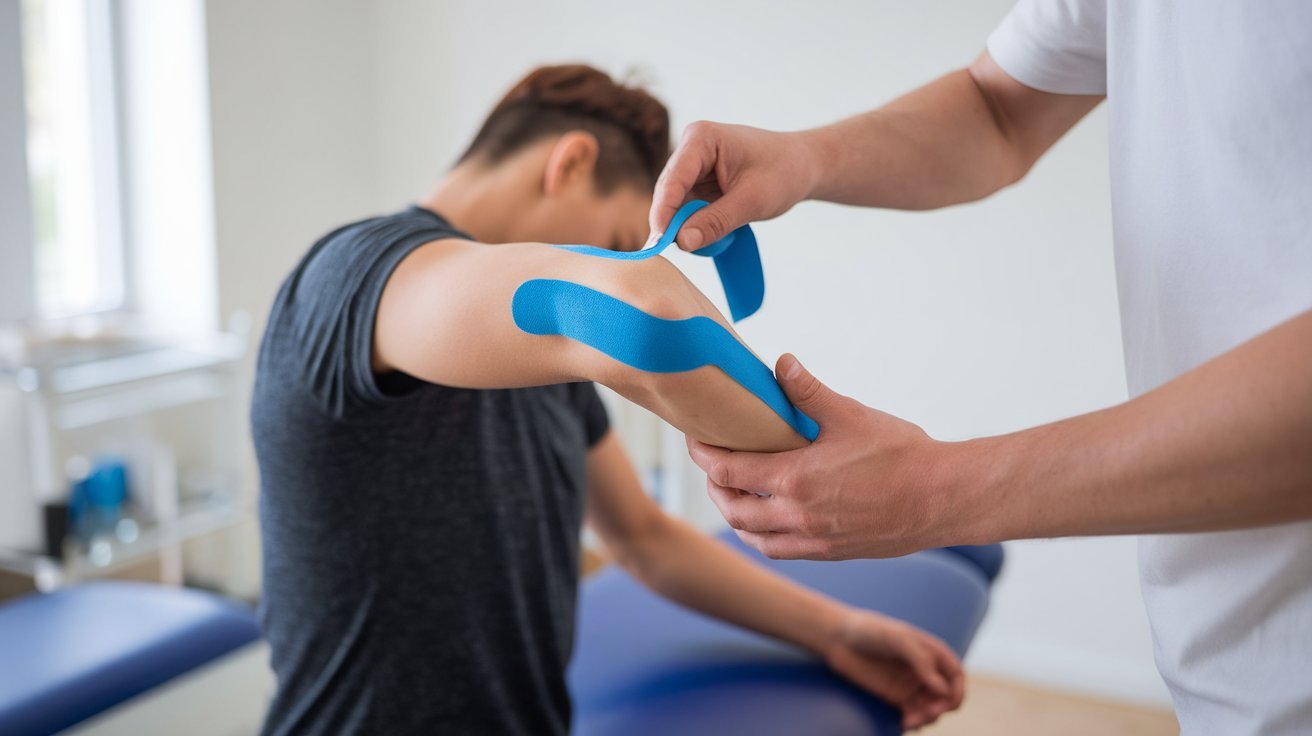
KT Tape elbow applications are commonly used by athletes, active adults, and people who experience occasional elbow discomfort during sports, exercise, work, or everyday activities. Elastic kinesiology tape can provide flexible support while allowing the elbow to move, making it different from rigid athletic tape or a traditional brace.
KT Tape provides several elbow-specific application methods, including a general elbow support, an application for tennis elbow, and another for golf elbow. The appropriate taping pattern depends on where the discomfort occurs and what type of support is needed.
It is important to view KT Tape as a supportive tool rather than a substitute for diagnosis or treatment. Persistent, severe, or unexplained elbow pain should be evaluated by an appropriate healthcare professional.
What Is KT Tape Elbow Taping?
KT Tape elbow taping involves placing elastic kinesiology tape around the upper arm, elbow, and forearm in a specific pattern. Unlike rigid tape, kinesiology tape is designed to stretch and move with the body.
The elbow is a complex joint connecting the upper arm and forearm. It helps us bend and straighten the arm, rotate the forearm, lift objects, grip, throw, and perform countless everyday movements. Because the elbow is involved in both powerful and precise movements, repetitive activity can sometimes produce discomfort or irritation.
KT Tape’s official resources describe elbow applications for general elbow issues as well as more specific patterns for tennis elbow and golf elbow.
The objective of taping is generally to provide support while maintaining mobility. KT Tape also states that its elbow applications are intended to provide support while maintaining the elbow’s range of motion.
How to Apply KT Tape to the Elbow
Correct preparation is one of the most important parts of a successful KT Tape elbow application. The skin should be clean and completely dry. Lotions, oils, sunscreen, sweat, and other substances can interfere with adhesion. KT Tape specifically recommends cleaning and drying the area before application.
For a general elbow application, the elbow is positioned at approximately 90 degrees. KT Tape’s instructions use two strips, with each strip beginning with an unstretched anchor, continuing through the target area with moderate stretch, and finishing with an unstretched anchor.
A general process is:
- Clean and dry the skin.
- Prepare the required strips of KT Tape.
- Bend the elbow to approximately 90 degrees.
- Place the first anchor without stretching the tape.
- Apply the middle portion with the recommended amount of stretch.
- Finish the final anchor without stretching.
- Repeat the pattern with the second strip.
- Rub the completed tape gently to help activate the adhesive.
KT Tape’s official guidance emphasizes leaving approximately 3–5 cm at each end without stretch and avoiding excessive overall tension.
The exact application should follow the instructions for the specific KT Tape product and the particular elbow problem.
KT Tape for Tennis Elbow
Tennis elbow, commonly associated with discomfort around the outside of the elbow, is one of the most searched reasons for elbow taping. Despite its name, it is not limited to tennis players. Repetitive gripping, wrist movements, manual work, racquet sports, and other activities can contribute to symptoms.
KT Tape provides a dedicated tennis-elbow application. Its official instructions position the elbow at 90 degrees and use strips that travel across the outside of the elbow and along the forearm.
The application generally follows an anchor-stretch-anchor approach. The first anchor is placed without stretch, the middle section is applied with moderate stretch around the targeted region, and the final anchor is applied without stretch.
A second strip can cross the first strip and pass over the area of concern. The completed tape is then rubbed to improve contact with the skin.
KT Tape’s educational material describes its tennis-elbow application as a way to provide support and pain relief during activity, while also recommending broader measures such as appropriate stretching, strengthening, technique improvement, and reducing activities that aggravate symptoms.
KT Tape for Golf Elbow and General Elbow Support
Elbow discomfort is not always located on the outside of the joint. Golf elbow generally involves the inside of the elbow, so a taping pattern designed for the lateral side may not be appropriate.
KT Tape’s official guide specifically lists an inner-elbow support application for golf elbow, alongside its general elbow and tennis-elbow techniques.
This distinction is important because the location and cause of discomfort can affect how support is applied. Rather than automatically using the same pattern for every elbow problem, we should identify the relevant area and use the application intended for that situation.
For general weakness or nonspecific elbow discomfort, KT Tape also provides a general elbow support application. The company’s video tutorial describes this approach as providing support during activity while maintaining movement.
If the source of pain is uncertain, however, taping should not be used to mask symptoms indefinitely.
How to Make KT Tape Stay on the Elbow
The elbow moves constantly, which means adhesion is particularly important. Poor preparation can cause the tape to peel prematurely.
The first step is cleaning and drying the skin thoroughly. KT Tape advises avoiding lotions and other substances that can interfere with adhesive performance.
We should also avoid touching the adhesive excessively. KT Tape’s official instructions warn that touching or repeatedly repositioning the adhesive can reduce its sticking ability.
Another important point is not overstretching the tape. Excessive tension can contribute to skin irritation and can also make the tape more likely to lift. KT Tape recommends leaving the ends without stretch and applying the appropriate tension only through the working section.
After application, gently rubbing the tape can help improve contact between the adhesive and skin. We should also avoid immediately disturbing the edges.
For best results, KT Tape’s guidance recommends applying the tape approximately 60 minutes before exercise to allow the adhesive to establish properly.
Common KT Tape Elbow Mistakes to Avoid
Several simple mistakes can reduce the effectiveness or comfort of an elbow taping application.
The first is applying tape to dirty or oily skin. Even a good adhesive may struggle to remain attached when the skin contains lotion, sweat, or oil.
Another mistake is applying too much tension. More stretch does not automatically mean more support. Excessive tension can cause discomfort, skin irritation, or premature lifting. KT Tape specifically warns against pulling the tape excessively.
We should also avoid placing tape directly over irritated, damaged, or compromised skin. If the skin develops significant redness, itching, burning, blistering, or other concerning reactions, the tape should be removed.
Finally, we should not repeatedly reapply the same piece after it has lost adhesion. KT Tape advises that touching the adhesive or repositioning the tape can reduce its sticking ability.
How to Remove KT Tape From the Elbow Safely
Removing kinesiology tape should be done carefully because the skin around the elbow can be sensitive.
Instead of quickly pulling the tape away, we should begin at a corner and slowly peel it back while supporting the skin. KT Tape’s official instructions recommend holding the skin with one hand while gently peeling the tape with the other.
If the tape is difficult to remove, KT Tape’s guidance suggests using an appropriate oil, such as baby oil, and removing the tape slowly rather than forcibly.
After removal, the skin should be inspected. If there is significant irritation, we should allow the area to recover before applying more tape.
Is KT Tape Elbow Taping Right for You?
KT Tape elbow taping can be a convenient form of flexible support for certain activities and types of elbow discomfort. It can be particularly appealing to active people because it does not immobilize the joint in the same way as a rigid brace.
However, taping should be considered one part of a broader approach to managing elbow problems. The underlying cause matters, and persistent pain can sometimes indicate an injury or condition that requires professional assessment.
KT Tape itself notes that its taping applications are not clinically proven for every injury.
If elbow pain is severe, follows a significant injury, is accompanied by substantial swelling or deformity, causes weakness or numbness, or does not improve, professional medical evaluation is appropriate.
Final Thoughts on KT Tape Elbow in 2026
KT Tape elbow applications offer a practical way to add flexible support while keeping the elbow relatively free to move. The key to a successful application is using the correct taping pattern, preparing clean and dry skin, controlling the amount of stretch, leaving the anchors unstretched, and applying the tape carefully.
For general elbow discomfort, KT Tape provides a dedicated support technique. For pain associated with the outside of the elbow, a tennis-elbow application is available, while the company also provides a separate approach for golf elbow and inner-elbow discomfort.
The most important principle is to match the application to the situation rather than treating every elbow problem identically. When combined with appropriate activity modification, rehabilitation, strengthening, and professional guidance when necessary, kinesiology tape can be a useful addition to an active person’s routine.
For anyone learning how to tape an elbow with KT Tape in 2026, following the manufacturer’s current application instructions is the best starting point for achieving a secure, comfortable, and movement-friendly result.

The half-kneeling hip flexor stretch is a simple but highly effective mobility exercise for improving flexibility around the front of the hip. We can perform it with minimal space and no equipment, making it useful before workouts, after prolonged sitting, or as part of a regular mobility routine.
The movement primarily targets the hip flexors, including muscles such as the iliopsoas and rectus femoris. When these muscles feel tight, we may notice restricted hip extension, difficulty maintaining an upright posture, or discomfort when performing movements such as walking, lunging, squatting, or running. Practicing the half-kneeling stretch with controlled positioning can help us develop better hip mobility while teaching us how to maintain proper pelvic alignment.
What Is the Half-Kneeling Hip Flexor Stretch?
The half-kneeling hip flexor stretch places one leg forward with the opposite knee resting on the floor. From this position, we gently move the pelvis forward while keeping the torso controlled. The stretch is generally felt along the front of the hip and upper thigh of the kneeling leg.
Unlike simply pushing the hips forward, effective stretching requires us to control the pelvis. A slight posterior pelvic tilt, sometimes described as gently tucking the tailbone underneath us, can increase the emphasis on the hip flexors without requiring excessive movement.
We should think about creating a long, stable posture rather than forcing the body as far forward as possible. The goal is a controlled stretch—not pain.
How to Perform the Half-Kneeling Hip Flexor Stretch Correctly
We can follow these steps to perform the exercise safely and effectively:
- Begin in a half-kneeling position, with the right knee on the floor and the left foot positioned in front.
- Place the front foot firmly on the floor with the knee approximately over the ankle.
- Keep the torso upright and the chest relaxed rather than leaning backward.
- Gently tighten the abdominal muscles and slightly tuck the pelvis.
- Squeeze the glute of the kneeling leg.
- Slowly shift the hips forward while maintaining the pelvic position.
- Stop when we feel a comfortable stretch through the front of the right hip.
- Hold the position while breathing slowly and steadily.
- Return to the starting position with control.
- Repeat on the opposite side.
We should avoid bouncing or aggressively pushing into the stretch. A smooth movement allows us to maintain control and makes it easier to distinguish normal stretching from uncomfortable or potentially harmful sensations.
For a basic flexibility routine, we can hold the stretch for approximately 20 to 30 seconds and repeat it for two or three rounds per side. Some people may prefer shorter holds during a warm-up and longer static holds after training.
Benefits of the Half-Kneeling Hip Flexor Stretch
The half-kneeling hip flexor stretch can provide several useful mobility benefits when incorporated consistently.
1. Improves Hip Flexor Flexibility
Regular stretching can help us work on flexibility in the muscles at the front of the hip. This can be particularly useful when our daily activities involve prolonged sitting.
2. Supports Hip Extension
Healthy hip extension is important for activities such as walking, running, climbing stairs, and athletic movements. If the hip flexors feel restricted, controlled stretching may help us work toward a greater comfortable range of motion.
3. Counteracts Prolonged Sitting
Spending many hours seated keeps the hips in a flexed position. The half-kneeling stretch provides an opportunity to move the hip in the opposite direction—toward extension.
However, stretching alone does not completely address the effects of prolonged sitting. Combining mobility exercises with regular movement breaks and strengthening work can create a more complete approach.
4. Complements Lower-Body Training
We can include this stretch in routines involving squats, lunges, running, cycling, strength training, and sports. Improved mobility may make it easier to achieve comfortable positions during lower-body exercises.
5. Encourages Better Body Awareness
The exercise also teaches us to recognize the relationship between the pelvis, hips, torso, and legs. Learning to control these areas can make other mobility exercises easier to perform correctly.
Common Half-Kneeling Hip Flexor Stretch Mistakes
Although the movement looks simple, several common errors can reduce its effectiveness.
Pushing the Hips Too Far Forward
More movement does not automatically mean a better stretch. If we aggressively drive the pelvis forward, we may compensate by arching the lower back. Instead, we should maintain a controlled pelvis and move only as far as we can without losing alignment.
Arching the Lower Back
An excessive lower-back arch can shift the movement away from the intended hip position. Keeping the core gently engaged and using a slight posterior pelvic tilt can help us maintain control.
Allowing the Front Knee to Collapse
The front knee should remain stable and generally track in the same direction as the foot. We should avoid allowing it to collapse inward while moving through the stretch.
Leaning the Torso Backward
Leaning backward can change the mechanics of the exercise and reduce the focus on the front of the kneeling hip. We should aim for a tall, neutral torso.
Holding the Breath
Breath-holding can create unnecessary tension. Instead, we can use slow, relaxed breathing throughout the hold.
Stretching Through Pain
A mild pulling or stretching sensation is generally different from sharp, burning, electric, or severe pain. We should stop if the movement causes concerning symptoms rather than attempting to stretch through them.
Half-Kneeling Hip Flexor Stretch Variations
Once we are comfortable with the basic version, several variations can make the exercise more specific to our mobility goals.
Half-Kneeling Hip Flexor Stretch With Arm Reach
We can raise the arm on the same side as the kneeling leg and gently reach upward. This can create additional length through the side of the torso while maintaining the hip stretch.
Half-Kneeling Hip Flexor Stretch With Side Bend
From the basic position, we can gently reach the arm overhead and perform a small side bend away from the kneeling side. The movement should remain controlled and should not cause discomfort.
Dynamic Half-Kneeling Hip Flexor Stretch
Instead of holding the position, we can slowly move in and out of the stretch. This variation can be useful during a dynamic warm-up, when we want to prepare the body for movement rather than perform prolonged static stretching.
Couch Stretch
For a stronger variation that involves the hip flexors and quadriceps, we can place the rear foot against a stable elevated surface. This version is considerably more intense, so we should first develop comfort and control with the basic half-kneeling position.
When Should We Do the Half-Kneeling Hip Flexor Stretch?
Timing depends on our goal.
Before exercise, we can use a dynamic version as part of a warm-up. Controlled repetitions can help us move through hip extension without requiring a prolonged static hold.
After exercise, longer comfortable holds may be appropriate as part of a cool-down or flexibility session.
We can also perform the basic stretch during the day, particularly after periods of sitting. A short mobility break can be a practical way to introduce more movement into a sedentary routine.
The most important factor is consistency. Performing a few controlled repetitions or short holds regularly is generally more practical than performing an extremely intense stretching session only occasionally.
How Often Should We Stretch the Hip Flexors?
There is no single frequency that works for everyone. We can generally include hip-flexor mobility work several times per week, adjusting the duration and intensity according to our training schedule and individual tolerance.
For general mobility, two or three sets per side can be a useful starting point. If the exercise is part of a rehabilitation program, athletic program, or response to persistent discomfort, the appropriate frequency should be determined according to the specific situation.
Stretching should complement—not replace—strength training, movement variety, adequate recovery, and good exercise technique.
Final Thoughts on the Half-Kneeling Hip Flexor Stretch
The half-kneeling hip flexor stretch is one of the simplest ways to work on mobility at the front of the hip. Its effectiveness comes less from forcing a deep stretch and more from maintaining good alignment, controlling the pelvis, engaging the glute, and moving gradually into a comfortable range.
By practicing the exercise consistently, we can make it a useful part of a broader mobility routine. Whether we spend much of the day sitting, participate in sports, or regularly perform lower-body workouts, controlled hip-flexor stretching can help us develop greater awareness and comfortable movement.
For the best results, we should prioritize quality over intensity: maintain a stable position, breathe normally, avoid bouncing, and stop if we experience sharp or unusual pain.

Tozymagazine.com: Complete Guide to Tozy Magazine in 2026

Jeannine Belleguic: Biography, Family, Life, Death, and Public Records in 2026

Poieno: Meaning, Origin, Creative Concept, Uses, and What It Really Means in 2026

Meinhard Schwarzenegger: The Untold Story of Arnold Schwarzenegger’s Older Brother

What Does TB Mean in Text? Complete Meaning, Uses, Examples, and Common Interpretations (2026 Guide)

PushWiki com: A Complete Guide to the Knowledge Platform, Features, and User Experience
 Celebrity3 months ago
Meinhard Schwarzenegger: The Untold Story of Arnold Schwarzenegger’s Older Brother
- Blog3 months ago
What Does TB Mean in Text? Complete Meaning, Uses, Examples, and Common Interpretations (2026 Guide)
- Business3 months ago
PushWiki com: A Complete Guide to the Knowledge Platform, Features, and User Experience
- Business3 months ago
BacktoFrontShow Pricing: Complete Guide to Plans, Features, Value, and Cost in 2026
- Celebrity3 months ago
Karen Mendes: Biography, Career, Achievements, Personal Life, and Lasting Influence
- Blog3 months ago
Arial or Aerial? Understanding the Difference, Correct Usage, Meaning, and Common Mistakes (2026 Guide)
- Blog3 months ago
Busy Things: A Complete Guide to Understanding, Managing, and Making the Most of a Busy Life
- Blog3 months ago
Blog ThriftyEvents.net: The Ultimate 2026 Guide to Budget-Friendly Event Planning, AI-Powered Content Creation