Social Media
IMO Meaning in Texting: What Does IMO Mean in Messages and Social Media? (2026 Guide)

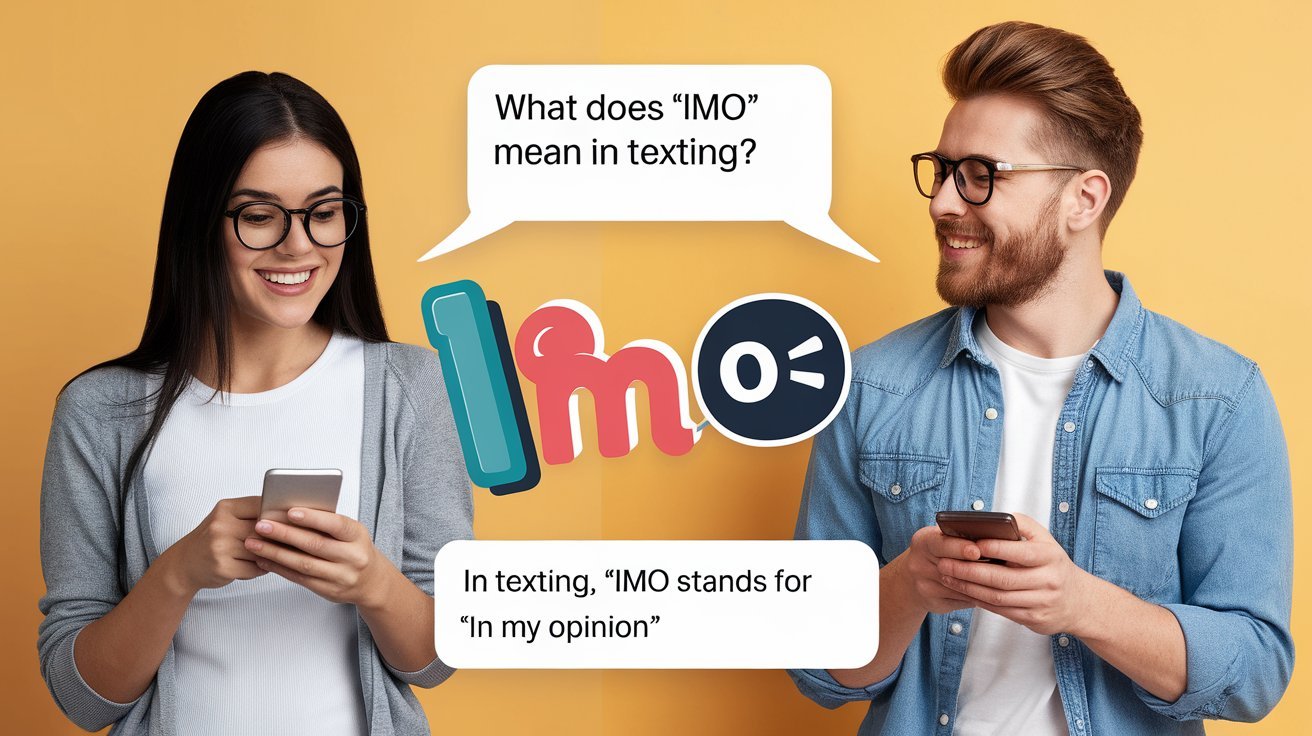
When we see IMO in a text message, social media comment, group chat, or online discussion, it usually has a simple meaning: “In My Opinion.” This popular abbreviation allows someone to introduce a personal view without typing the entire phrase. It is widely used in casual digital communication and can appear in conversations about almost any subject.
For example, someone might write, “IMO, that was the best movie of the year.” In this sentence, IMO means “In my opinion,” making it clear that the statement represents a personal viewpoint rather than an absolute fact.
Although the meaning of IMO is straightforward in most texting situations, understanding how and when to use it can make online communication clearer. The abbreviation may also be confused with similar terms such as IMHO, while capital letters and lowercase letters can make no difference in informal messages. This complete 2026 guide explains the IMO meaning in texting, its use on social media, examples, similar abbreviations, and the best ways to understand it from context.
What Does IMO Mean in Texting?
The most common IMO meaning in texting is “In My Opinion.” People use it before or after expressing a personal belief, preference, judgment, or interpretation.
For example:
“IMO, this restaurant has the best food in town.”
This means:
“In my opinion, this restaurant has the best food in town.”
Another example is:
“That game was too difficult, IMO.”
Here, the person is saying that they personally believe the game was too difficult.
IMO helps communicate that a statement is subjective. It signals that the speaker is sharing a viewpoint rather than claiming that everyone must agree.
Common examples include:
- IMO, this is the better option.
- That was the funniest part, IMO.
- IMO, we should wait until tomorrow.
- The first version was better IMO.
- IMO, the ending could have been stronger.
The abbreviation is particularly common in fast conversations because it is shorter and easier to type than the full phrase “In My Opinion.”
How Is IMO Used in Text Messages?
Using IMO in a text is simple. We can place it at the beginning of a sentence when introducing an opinion or at the end when clarifying that the previous statement is our personal view.
At the beginning:
“IMO, you should choose the earlier flight.”
At the end:
“The blue one looks better IMO.”
Both uses are common in informal messaging.
IMO can be useful when we want to disagree politely. For example, instead of writing:
“You are wrong. This is the best choice.”
we might write:
“IMO, the other option is a better choice.”
The abbreviation does not automatically make every disagreement polite, but it can help show that we recognize our statement as a personal opinion.
However, tone still matters. A message can sound friendly or rude depending on the words around IMO. If we use it with insults or aggressive language, the abbreviation will not make the message respectful.
For clear communication, it is best to use IMO naturally rather than adding it to every sentence.
IMO Meaning on Social Media
The meaning of IMO on social media is usually the same as in texting: “In My Opinion.” It commonly appears on platforms where people share reactions, reviews, recommendations, and personal thoughts.
Someone might post:
“IMO, this is the best song on the album.”
Or write:
“The older version was better, IMO.”
In both cases, IMO tells readers that the statement is based on personal preference.
The abbreviation is especially useful in online discussions where different opinions are expected. Topics such as movies, music, games, technology, fashion, food, and sports often produce many different viewpoints. Adding IMO can make it clear that the writer is not presenting their statement as an unquestionable fact.
Social-media users may write the abbreviation in different forms:
IMO
imo
Imo
In casual communication, these usually have the same meaning. Capitalization rarely changes the definition.
Examples of IMO in Everyday Conversations
The easiest way to understand what IMO means in texting is to see how it appears in real-style sentences.
Example 1: Sharing a Preference
“IMO, the first design looks better.”
Meaning: The person personally prefers the first design.
Example 2: Giving Advice
“You should leave earlier IMO because traffic could be heavy.”
Meaning: The advice reflects the sender’s personal judgment.
Example 3: Discussing Entertainment
“That was the best episode of the season IMO.”
Meaning: The speaker considers it the best episode, but recognizes that others may disagree.
Example 4: Comparing Options
“The cheaper option is better value IMO.”
Meaning: This is the sender’s personal assessment.
Example 5: A Friendly Disagreement
Person 1: I think the sequel was better.
Person 2: IMO, the original was much stronger.
Here, IMO helps introduce a different perspective.
These examples show that IMO can be used almost anywhere an opinion is being expressed.
IMO vs. IMHO: What Is the Difference?
A common question is whether IMO and IMHO mean the same thing. They are similar, but there is a small difference.
IMO = In My Opinion
IMHO = In My Humble Opinion
Both abbreviations introduce a personal viewpoint. However, IMHO adds the word “humble,” which can make the phrase sound more modest.
For example:
“IMO, this is the best solution.”
means:
“In my opinion, this is the best solution.”
Meanwhile:
“IMHO, this is the best solution.”
means:
“In my humble opinion, this is the best solution.”
In practice, both are often used casually, and tone depends on context. Sometimes IMHO is genuinely modest, while in other situations it may be used humorously or sarcastically.
Other related expressions include:
AFAIK = As Far As I Know
TBH = To Be Honest
FWIW = For What It’s Worth
IIRC = If I Recall Correctly
Each abbreviation has a different purpose, but all can help writers communicate nuance in online conversations.
Why Do People Use IMO Instead of Writing “In My Opinion”?
The main reason is speed and convenience. Texting and online communication often favor short expressions, especially during quick conversations.
Instead of typing four words, a person can simply write IMO.
The abbreviation is also widely recognized among people familiar with internet slang. Because of its popularity, many readers immediately understand its meaning.
IMO can also make the structure of a message clearer. When readers see it at the beginning of a sentence, they know that a personal viewpoint is coming.
For example:
“This phone has the best camera.”
could sound like a factual claim.
But:
“IMO, this phone has the best camera.”
clearly presents the statement as a personal judgment.
This distinction can be useful in discussions where multiple answers or preferences are possible.
When Should We Use IMO and When Should We Avoid It?
IMO works best in informal communication. It is appropriate for text messages, group chats, social-media posts, comments, forums, and casual online discussions.
It can be useful when:
- Sharing a personal preference
- Giving informal advice
- Reviewing a product, movie, or game
- Disagreeing respectfully
- Joining an online discussion
- Comparing two or more options
However, it may not be appropriate in every situation. In a formal business email, academic paper, legal document, or professional report, spelling out “in my opinion” or using more precise language may be better.
For example, a professional report may require evidence and analysis rather than a casual abbreviation.
The audience should always influence our choice of language. If the reader may not understand texting slang, using the complete phrase prevents confusion.
Common Misunderstandings About IMO Meaning
One common misunderstanding is thinking that IMO makes a statement automatically correct. It does not. The abbreviation simply identifies the statement as an opinion.
Another mistake is confusing IMO with IMHO. While they are similar, IMHO includes “humble.”
Some people also assume that IMO is rude or argumentative. In reality, its tone depends on how it is used. It can introduce a friendly opinion, but it can also sound dismissive if paired with aggressive language.
Finally, capitalization does not usually change the meaning. IMO, imo, and Imo generally mean the same thing in casual digital communication.
The best way to understand IMO is to read the full message and consider the conversation’s tone.
Conclusion: What Does IMO Mean in Texting?
So, what does IMO mean in texting? In almost all casual text and social-media conversations, IMO means “In My Opinion.” It is used to introduce or clarify a personal view, preference, or judgment.
For example:
“IMO, that was the best choice.”
means:
“In my opinion, that was the best choice.”
The abbreviation is useful because it is short, widely understood, and easy to use. It can help distinguish personal opinions from statements presented as facts and can make online discussions feel more conversational.
Whether we see IMO in a text message, social-media comment, group chat, or online discussion, the meaning is usually straightforward. Remember: IMO = In My Opinion, and the phrase signals that the person is sharing their own perspective.
Frequently Asked Questions About IMO Meaning
What does IMO stand for in texting?
IMO stands for “In My Opinion.”
What does IMO mean in a text message?
It means that the sender is expressing a personal opinion or viewpoint.
What does IMO mean on social media?
On social media, IMO usually means “In My Opinion” and is used when sharing personal thoughts or preferences.
Is IMO rude?
No, IMO is not inherently rude. Its tone depends on the surrounding words and the way it is used.
What is the difference between IMO and IMHO?
IMO means “In My Opinion,” while IMHO means “In My Humble Opinion.”
Can I use IMO at work?
IMO is best suited to informal communication. In formal or professional writing, spelling out the phrase or using more precise wording may be clearer.
Social Media
Editor Social Media Maven Keezy.co (2026): A Complete Guide to Digital Content, Social Media Trends, and Online Influence

The world of social media evolves rapidly, making reliable digital insights more valuable than ever. Discussions surrounding Editor Social Media Maven Keezy.co have attracted attention from marketers, creators, entrepreneurs, and technology enthusiasts seeking information about modern content strategies, platform updates, and digital engagement.
As businesses continue investing in online branding throughout 2026, websites that publish educational resources about social media, digital marketing, and content creation remain increasingly relevant. This guide explores the concept of Editor Social Media Maven Keezy.co, its role in digital publishing, the importance of editorial expertise, and how quality content supports today’s social media landscape.
What Is Editor Social Media Maven Keezy.co?
Editor Social Media Maven Keezy.co generally refers to editorial content and resources associated with Keezy.co, focusing on topics such as social media marketing, digital communication, technology trends, and online branding.
Editorial content in this space often helps readers understand:
- Social media strategies
- Content creation techniques
- Audience engagement
- Digital marketing trends
- Platform updates
- Brand storytelling
- Influencer marketing
- Online business growth
Rather than simply reporting news, editorial resources typically provide practical insights that help readers improve their digital presence.
Why Editorial Expertise Matters in Social Media
Social media changes quickly. New algorithms, platform features, and user behaviors constantly reshape how content performs. An experienced editor helps ensure information is:
- Accurate
- Relevant
- Easy to understand
- Well researched
- Updated regularly
High-quality editorial work also improves readability by organizing articles into logical sections with clear headings, examples, and actionable advice.
For businesses and creators alike, trustworthy editorial guidance can simplify complex digital topics and support better decision-making.
Key Topics Covered by Social Media Editorial Platforms
Editorial websites focused on social media often publish content across several major categories.
Social Media Marketing
Articles may explain how brands can build stronger relationships with their audiences through consistent messaging, authentic engagement, and strategic content planning.
Content Creation
Content remains at the heart of every successful online strategy. Common topics include:
- Short-form videos
- Long-form articles
- Image optimization
- Storytelling techniques
- Visual branding
- Content calendars
- Creative workflows
Technology and Digital Trends
Editorial platforms frequently explore emerging technologies, including:
- Artificial intelligence
- Automation tools
- Analytics platforms
- Creator economy developments
- Digital productivity solutions
These insights help readers stay informed about the latest innovations shaping online communication.
The Importance of High-Quality Content in 2026
Quality content continues to outperform low-value material because readers expect useful, trustworthy, and engaging information.
Effective editorial content typically demonstrates:
- Clear organization
- Accurate information
- Comprehensive explanations
- Practical examples
- Professional writing
- Consistent updates
Articles that genuinely answer readers’ questions tend to earn greater trust and encourage repeat visits.
For businesses, informative content also strengthens brand authority and supports long-term audience growth.
Best Practices for Social Media Success
Whether you are a business owner, creator, or marketer, several proven practices can improve your social media performance.
Understand Your Audience
Knowing your audience’s interests, goals, and challenges allows you to create content that is more relevant and engaging.
Maintain a Consistent Brand Voice
Consistency across posts, articles, and visuals helps build recognition and trust over time.
Focus on Valuable Content
Instead of publishing large volumes of content, prioritize material that educates, informs, entertains, or solves problems.
Use Analytics
Reviewing engagement metrics such as impressions, clicks, shares, and audience retention helps identify what works best and where improvements can be made.
Adapt to Platform Changes
Social media platforms regularly introduce new features and adjust their algorithms. Staying informed allows creators and businesses to refine their strategies effectively.
How Editorial Platforms Support Digital Growth
Editorial websites contribute to the digital ecosystem by helping readers make informed decisions. They often provide:
- Educational articles
- Industry news
- Strategy guides
- Tool recommendations
- Trend analysis
- Best practices
- Case studies
- Expert commentary
By presenting information in a structured and accessible format, these resources support continuous learning for professionals and beginners alike.
Looking Ahead: The Future of Social Media Editorial Content
As digital platforms continue to evolve, editorial content will remain essential for interpreting new technologies, marketing approaches, and communication trends. Artificial intelligence, creator-focused tools, and enhanced analytics are expected to play an even greater role in helping businesses understand audience behavior and optimize their online presence.
Readers will increasingly seek content that combines accuracy, depth, and practical advice. Editorial platforms that consistently deliver reliable information and adapt to changing digital landscapes will continue to provide significant value in 2026 and beyond.
Conclusion
Editor Social Media Maven Keezy.co represents the growing importance of well-researched editorial content within today’s digital landscape. From social media marketing and content creation to technology trends and online branding, quality editorial resources help readers navigate an increasingly complex online environment.
By focusing on clear communication, reliable information, and actionable insights, editorial platforms can support businesses, creators, and marketing professionals as they build stronger digital strategies and meaningful audience connections.
Frequently Asked Questions (FAQ)
What is Editor Social Media Maven Keezy.co?
It generally refers to editorial content associated with Keezy.co that focuses on social media, digital marketing, technology, and online communication.
Why is editorial content important for social media?
Editorial content helps readers understand trends, best practices, and platform updates through accurate, organized, and well-researched articles.
Who benefits from social media editorial resources?
Business owners, marketers, content creators, influencers, students, and anyone interested in digital communication can benefit from these resources.
What topics are commonly covered?
Common subjects include social media marketing, content strategy, branding, technology news, analytics, digital tools, and online business growth.
Why is high-quality content important in 2026?
Well-written, informative content builds trust, improves user experience, and helps readers find reliable answers to their questions in an increasingly competitive digital landscape.

Tozymagazine.com: Complete Guide to Tozy Magazine in 2026

Jeannine Belleguic: Biography, Family, Life, Death, and Public Records in 2026

Poieno: Meaning, Origin, Creative Concept, Uses, and What It Really Means in 2026

Meinhard Schwarzenegger: The Untold Story of Arnold Schwarzenegger’s Older Brother

What Does TB Mean in Text? Complete Meaning, Uses, Examples, and Common Interpretations (2026 Guide)

PushWiki com: A Complete Guide to the Knowledge Platform, Features, and User Experience
 Celebrity3 months ago
Meinhard Schwarzenegger: The Untold Story of Arnold Schwarzenegger’s Older Brother
- Blog3 months ago
What Does TB Mean in Text? Complete Meaning, Uses, Examples, and Common Interpretations (2026 Guide)
- Business3 months ago
PushWiki com: A Complete Guide to the Knowledge Platform, Features, and User Experience
- Business3 months ago
BacktoFrontShow Pricing: Complete Guide to Plans, Features, Value, and Cost in 2026
- Celebrity3 months ago
Karen Mendes: Biography, Career, Achievements, Personal Life, and Lasting Influence
- Blog3 months ago
Arial or Aerial? Understanding the Difference, Correct Usage, Meaning, and Common Mistakes (2026 Guide)
- Blog3 months ago
Busy Things: A Complete Guide to Understanding, Managing, and Making the Most of a Busy Life
- Business3 months ago
In Touch LetsBuildUp.org: The Complete 2026 Guide to Community Engagement, AI Communication, and Digital Collaboration