
Blog
Cesta Roman: Exploring the Meaning, Origins, History, and Modern Significance


The phrase Cesta Roman has attracted growing interest online, yet many people are unsure of its exact meaning or historical background. Depending on the context, it may refer to a historical route, a Latin-derived expression, a place name, or a cultural reference connected to the legacy of the Roman civilization. Because of its intriguing wording, researchers, travelers, students, and history enthusiasts often search for reliable information about Cesta Roman and its significance.
The Roman Empire left behind one of the most influential civilizations in world history. From engineering marvels and military roads to legal systems and architecture, Roman achievements continue to shape modern societies. If the phrase Cesta Roman is encountered in travel literature, historical discussions, or cultural references, understanding its roots helps provide a deeper appreciation of the broader Roman legacy.
This comprehensive guide explores the possible meanings of Cesta Roman, its historical connections, linguistic origins, cultural importance, and why it continues to spark curiosity today.
What Does Cesta Roman Mean?
The interpretation of Cesta Roman depends largely on the context in which it appears. While there is no universally recognized historical term by that exact name, the phrase is commonly associated with Roman heritage or Roman roads because of its linguistic components.
The word “Roman” clearly refers to ancient Rome or something connected to Roman civilization. The word “Cesta” means “road,” “path,” or “journey” in several Slavic languages, including Czech and Slovak. Taken together, Cesta Roman can be interpreted as “Roman Road,” “Road to Rome,” or “Roman Path.”
This interpretation aligns well with one of the Roman Empire’s greatest achievements: its extraordinary network of roads that connected cities, military forts, trade centers, and provinces across Europe, North Africa, and parts of Asia.
Although the phrase itself is not a formal historical title, it evokes the remarkable infrastructure and enduring influence of Roman engineering.
The Historical Connection Between Cesta Roman and Roman Roads
One of the strongest associations with Cesta Roman is the extensive Roman road system, often considered among the finest engineering accomplishments of the ancient world.
The Romans built more than 250,000 miles (400,000 kilometers) of roads, with approximately 50,000 miles paved using advanced construction techniques. These roads were carefully designed to remain durable for centuries, and many sections are still visible today.
Roman roads served several important purposes:
- Supporting military movement
- Facilitating trade
- Connecting provinces
- Improving communication
- Encouraging cultural exchange
- Strengthening imperial administration
Roads became the backbone of the empire, enabling efficient travel and economic growth across vast territories.
If Cesta Roman is interpreted as a “Roman Road,” it symbolizes much more than physical transportation—it represents connectivity, innovation, and the expansion of one of history’s greatest civilizations.
Roman Engineering: Why Their Roads Were So Advanced
The Romans did not simply create dirt paths. Their engineers developed sophisticated construction methods that allowed roads to withstand heavy traffic and harsh weather.
A typical Roman road consisted of several carefully planned layers:
Solid Foundation
Large stones formed a stable base that prevented shifting over time.
Crushed Stone Layers
Additional layers of gravel and smaller rocks improved drainage and structural strength.
Paved Surface
Large, tightly fitted paving stones created a smooth and durable roadway.
Drainage Systems
Roads were often slightly raised in the center, allowing rainwater to flow into side ditches instead of pooling on the surface.
These engineering techniques explain why many Roman roads have survived for nearly two thousand years.
The concept reflected by Cesta Roman therefore highlights Roman innovation, planning, and long-term thinking.
Cultural Importance of Cesta Roman
Beyond physical roads, Cesta Roman can also symbolize the broader cultural journey of Roman civilization.
The Roman Empire influenced nearly every aspect of European development, including:
Language
Many modern languages, particularly the Romance languages, evolved from Latin.
Law
Roman legal principles continue to influence modern judicial systems.
Architecture
Arches, aqueducts, amphitheaters, and domes remain iconic examples of Roman design.
Government
Numerous political institutions trace their foundations to Roman administrative practices.
Urban Planning
Cities throughout Europe still reflect Roman layouts, including streets, public squares, and infrastructure.
Viewed symbolically, Cesta Roman represents the path through which Roman ideas spread across continents and continued shaping civilizations long after the empire itself declined.
Why People Search for Cesta Roman Today
Interest in Cesta Roman has increased for several reasons.
Growing Interest in Ancient History
History enthusiasts frequently research Roman culture, military campaigns, architecture, and engineering.
Heritage Tourism
Many travelers seek ancient Roman roads, archaeological sites, and historical landmarks throughout Europe.
Educational Research
Students often encounter references related to Roman transportation networks and historical trade routes.
Cultural Curiosity
Unique phrases like Cesta Roman naturally attract attention because people want to understand their meaning and historical relevance.
The internet has also made niche historical topics more accessible, encouraging readers to explore lesser-known terms connected with ancient civilizations.
Modern Lessons Inspired by Cesta Roman
Although Roman roads were built centuries ago, the principles behind them remain surprisingly relevant today.
Long-Term Planning
Roman engineers designed infrastructure that lasted generations rather than decades.
Connectivity
Road networks encouraged communication, commerce, and cultural exchange—goals that remain essential in today’s interconnected world.
Quality Construction
The durability of Roman roads demonstrates the value of investing in high-quality materials and thoughtful engineering.
Strategic Thinking
Road placement reflected careful planning, supporting military, economic, and administrative objectives simultaneously.
Innovation
Roman builders continuously improved construction techniques based on practical experience.
These lessons continue to inspire modern engineers, historians, and policymakers who study ancient infrastructure.
Exploring Roman Heritage Through Travel
For travelers interested in experiencing the legacy represented by Cesta Roman, numerous destinations preserve remarkable examples of Roman engineering and culture.
Historic Roman roads can still be found in countries such as Italy, Spain, France, Croatia, Germany, and the United Kingdom. Walking along these ancient routes offers a unique opportunity to imagine how merchants, soldiers, and travelers once crossed the vast Roman Empire.
In addition to roads, visitors can explore:
- Ancient amphitheaters
- Roman baths
- Aqueducts
- Temples
- Fortifications
- Museums displaying Roman artifacts
- Archaeological parks
These sites provide valuable insight into the daily lives, technological achievements, and cultural traditions of one of history’s most influential civilizations.
For many visitors, following a “Roman road” becomes more than a sightseeing experience—it becomes a journey through history itself.
Conclusion
Although Cesta Roman does not refer to a single universally recognized historical term, it strongly evokes the remarkable legacy of Roman civilization, particularly its legendary road network. Whether interpreted as “Roman Road,” “Road to Rome,” or a symbolic journey through Roman history, the phrase captures the spirit of innovation, connectivity, and cultural influence that defined one of the world’s greatest empires.
The Roman Empire transformed transportation, engineering, architecture, law, governance, and urban planning in ways that continue to influence modern society. Studying concepts associated with Cesta Roman encourages a greater appreciation for these enduring contributions and highlights how ancient achievements still shape our world today.
As interest in Roman history, archaeology, and heritage tourism continues to grow, Cesta Roman remains an intriguing expression that invites readers to explore the lasting impact of Rome’s extraordinary civilization.
Frequently Asked Questions (FAQs)
What does Cesta Roman mean?
The phrase is commonly interpreted as “Roman Road,” “Road to Rome,” or “Roman Path,” combining a word meaning “road” or “journey” with “Roman.”
Is Cesta Roman an official historical term?
There is no widely recognized historical term by that exact name. It is generally understood as a descriptive or symbolic phrase connected to Roman heritage and infrastructure.
Why are Roman roads famous?
Roman roads were renowned for their exceptional engineering, durability, and ability to connect vast regions of the empire, supporting trade, military movement, and communication.
Can you still see Roman roads today?
Yes. Many original Roman roads and sections of ancient highways remain preserved across Europe and parts of the Middle East and North Africa, attracting historians and tourists alike.
Why is Cesta Roman searched online?
People search for Cesta Roman to understand its meaning, historical associations, and connection to the enduring legacy of Roman civilization, especially its famous road network.

Poieno is an unusual term that has attracted considerable attention online in 2026. People searching for it may find explanations connecting the word with creativity, purposeful action, innovation, personal growth, and the process of turning ideas into reality. However, the available explanations are not completely consistent, and Poieno does not currently have one universally accepted English dictionary definition.
That uncertainty is important. Some modern articles present Poieno as a creative philosophy, while others connect it to productivity, branding, mindful growth, or the transformation of abstract ideas into practical results. There are also claims about possible links to Ancient Greek and Romanian vocabulary, but those proposed origins should not automatically be treated as established etymology.
For 2026, the most useful way to understand Poieno is as an emerging online concept centered on creation and transformation, while clearly separating documented linguistic facts from newer interpretations.
What Is Poieno?
In its most common modern interpretation, Poieno describes the process of taking an idea and developing it into something meaningful or tangible. Instead of stopping at imagination or planning, the concept emphasizes action, experimentation, creation, evaluation, and improvement.
This makes Poieno relevant to many different activities. An artist may begin with an image in their imagination and gradually turn it into a finished painting. A writer can transform scattered thoughts into an article or book. An entrepreneur can develop an initial business idea into a product or service. A student can turn theoretical knowledge into a practical skill.
Several 2026 sources describe Poieno in this broad way, connecting it with creativity, innovation, transformation, and purposeful action.
The important point is that Poieno does not currently function like a conventional technical term with a single official definition. Different writers use it somewhat differently. One source may emphasize creativity, another personal development, and another practical innovation.
Therefore, context is essential when interpreting the word.
Where Did the Word Poieno Come From?
The proposed origin of Poieno is one of the most interesting and uncertain aspects of the term.
Several online explanations connect Poieno with the Ancient Greek verb poiein, generally translated as “to make” or “to do.” The Greek concept is genuinely associated with making and creating, and the related philosophical term poiesis has a documented history. Some modern writers use this linguistic connection to explain why Poieno is associated with creation.
However, there is an important distinction between saying that a modern term is conceptually inspired by an ancient word and proving that it is an established historical derivative of that word.
One 2026 analysis specifically challenges claims that Poieno is an authentic Ancient Greek word, noting that poiein is real but that Poieno itself is not established as a classical Greek derivative.
Other articles have proposed a connection with the Romanian word poiană, meaning a meadow or forest clearing. This has led some writers to describe Poieno poetically as something like a “creative clearing”—a space where ideas can develop naturally. Yet this proposed combination also lacks reliable evidence establishing it as the historical origin of the modern term.
Consequently, the safest explanation in 2026 is that Poieno’s exact etymology remains uncertain, even though the Greek concept of making provides a useful conceptual comparison.
Poieno as a Creative Philosophy
The strongest modern interpretation of Poieno is its connection with creative action.
Creativity is often described as the ability to generate ideas, but Poieno emphasizes what happens next. An idea has potential, but it becomes useful when someone begins developing it.
The process can involve several stages:
- Imagine — identify an idea or possibility.
- Explore — examine different ways it could work.
- Create — produce an initial version.
- Evaluate — identify strengths and weaknesses.
- Improve — make changes based on what has been learned.
- Complete — turn the developing idea into a useful outcome.
This interpretation makes Poieno relevant to artists, writers, designers, entrepreneurs, students, engineers, and innovators.
For example, a designer might begin with a rough sketch. The sketch is not the final product. Through experimentation, feedback, revisions, and testing, the original concept gradually becomes something functional.
In this sense, Poieno is less about having a brilliant idea and more about doing the work required to give that idea form.
How Poieno Relates to Personal Growth
Modern discussions also use Poieno in connection with personal development and intentional growth. The underlying principle is that people are not simply passive observers of their lives; they can actively shape skills, habits, projects, and goals.
Learning provides a straightforward example. Someone who wants to learn a language may begin with an abstract goal. They then practice vocabulary, study grammar, communicate with other speakers, make mistakes, receive feedback, and gradually improve.
The same pattern applies to professional development. A person may identify a career goal and then convert it into smaller actions such as learning a skill, creating projects, building experience, and seeking feedback.
Some 2026 interpretations additionally describe Poieno as a calmer approach to creativity, emphasizing meaningful progress instead of constant speed or pressure.
That interpretation should be understood as a contemporary philosophical use rather than a historically established definition.
Poieno in Business, Innovation, and Technology
The concept can also be applied to business and innovation. Companies routinely begin with assumptions about what customers need, then turn those assumptions into prototypes, products, services, and experiments.
A Poieno-style approach would emphasize movement from concept to execution:
Idea → prototype → testing → feedback → refinement → useful result
This process is especially relevant to modern technology companies. Software products rarely emerge perfectly on the first attempt. Developers create an initial version, observe how users interact with it, identify problems, and continue improving the product.
Brand development follows a similar pattern. A company may begin with a name and visual concept before developing its identity, messaging, products, customer experience, and public presence.
In this sense, Poieno can serve as a useful conceptual framework for understanding innovation, even though it is not an established universal business methodology.
Is Poieno a Real Word or an Internet-Created Term?
This is one of the most important questions surrounding the keyword.
There is currently no single authoritative dictionary definition establishing Poieno as a standard English word. Multiple recent articles call it an emerging or informal concept, while others present confident explanations about its meaning and origins.
At the same time, the word is undeniably being used online. A website operating at Poieno.co.uk describes itself as a blogging platform covering lifestyle, technology, travel, personal growth, health, and other topics.
This demonstrates an important distinction: a word can have an active modern online presence without having a long-established dictionary history.
Some sources go further and argue that Poieno may be an AI-generated or SEO-driven keyword rather than a naturally established linguistic term. The conflicting explanations make it particularly important to avoid presenting speculative etymology as fact.
Why Is Poieno Trending in 2026?
The growing visibility of Poieno appears to be connected largely to online publishing and search behavior. During 2026, numerous websites have published articles explaining the term and connecting it with creativity, innovation, personal growth, mindfulness, and purposeful action.
The unusual spelling itself may also encourage searches. When people encounter an unfamiliar word, they naturally want to know whether it is a name, philosophy, brand, cultural term, or typo.
That uncertainty creates an interesting digital phenomenon: the more articles that attempt to define an unfamiliar term, the more visible the term can become.
For readers, this creates both an opportunity and a challenge. The opportunity is to explore a potentially useful creative concept. The challenge is determining which claims are supported and which are simply repeated from other online articles.
Frequently Asked Questions About Poieno
What does Poieno mean?
Poieno is commonly used online as a modern concept associated with creativity, creation, transformation, and turning ideas into meaningful results. It does not currently have one universally accepted definition.
Is Poieno an Ancient Greek word?
Poiein is a genuine Ancient Greek verb associated with making or doing, but there is insufficient evidence to establish Poieno itself as an authentic Ancient Greek word or classical derivative.
Is Poieno connected to creativity?
Yes. Many contemporary explanations use Poieno to describe the movement from imagination to creation, making creativity one of the term’s strongest modern associations.
Is Poieno a business methodology?
Some websites describe it as a structured approach to productivity or innovation, but there is no universally recognized Poieno methodology established across business literature. Such descriptions should therefore be treated as particular interpretations.
Can Poieno be used for personal development?
Yes, as a modern conceptual framework. It can describe setting an intention, taking action, learning from experience, and gradually creating meaningful change.
Is Poieno a real company or website?
There is a website called Poieno.co.uk, which describes itself as a blogging platform covering multiple categories. That does not establish Poieno as a universally recognized company or philosophical movement.
Conclusion
Poieno is an emerging and unusual term whose modern meaning centers primarily on creation, transformation, purposeful action, and the journey from an idea to a tangible result. Its growing online presence in 2026 has produced many explanations, but those explanations are not entirely consistent.
The strongest documented linguistic comparison is with the Ancient Greek poiein, meaning “to make” or “to do,” although that connection should be described as a conceptual or proposed influence rather than proven etymology. Claims connecting the term to Romanian poiană or presenting Poieno as an ancient established word require similar caution.
Ultimately, the useful modern interpretation of Poieno is simple: an idea becomes meaningful when we begin creating, testing, learning, and improving it. Whether the word eventually develops a standardized definition or remains an internet-era creative concept, its central theme—turning imagination into action—fits naturally into conversations about creativity, innovation, learning, business, and personal growth in 2026.

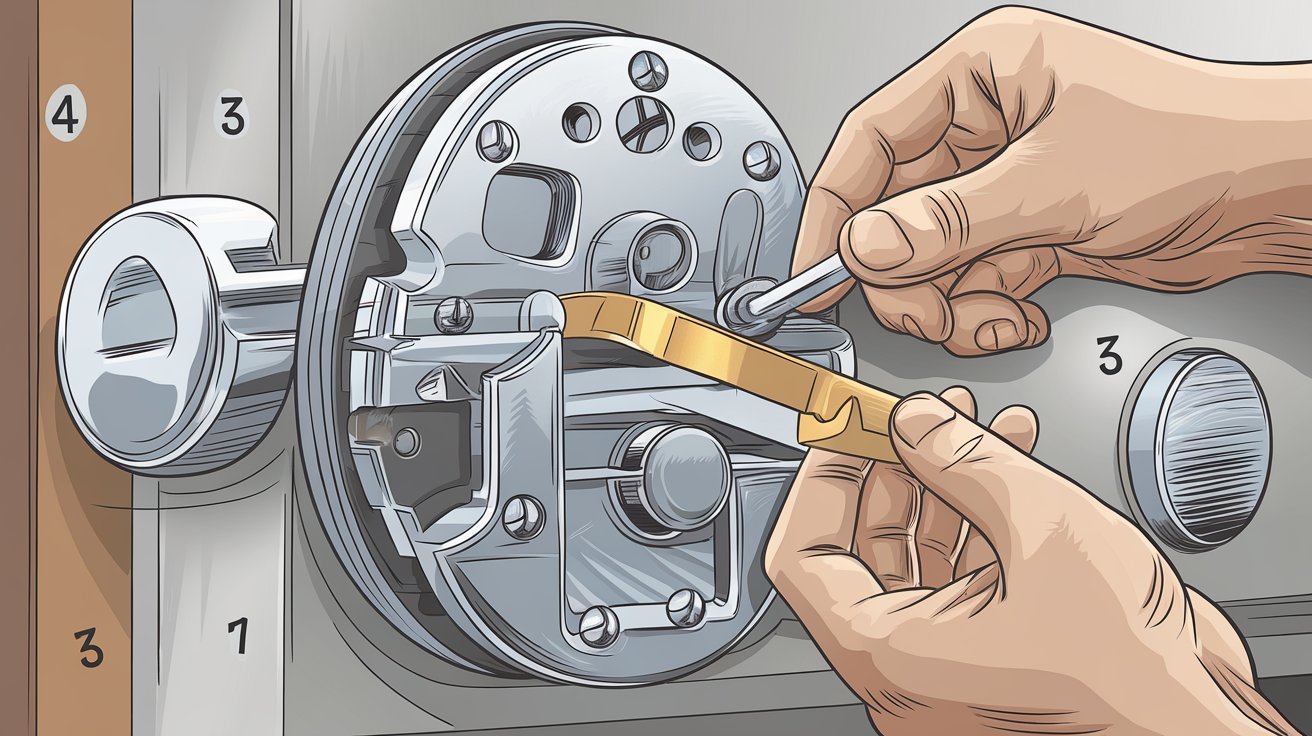
Rekeying a Kwikset lock is a practical way to change which key operates a door without replacing the entire lock. This can be useful when keys have been lost, when a former tenant or employee may still have a copy, after moving into a new home, or when several locks need to work with the same key. The exact process depends on the type of Kwikset lock installed. Some traditional Kwikset cylinders are rekeyed by changing the internal pins, while many newer Kwikset SmartKey locks use a special reset-and-learn process.
Before starting, we should identify the lock type and make sure we are the authorized owner or have permission to service it. We should also keep the existing key available when the particular model requires it. A careful approach prevents damage to the cylinder and helps ensure the lock operates smoothly when the work is finished.
What Does Rekeying a Kwikset Lock Mean?
how to rekey a Kwikset lock changes the internal locking configuration so that an existing lock accepts a different key. Unlike replacing a complete lock, rekeying normally leaves the exterior hardware, latch, and deadbolt in place. The primary purpose is to make the old key ineffective while allowing a new key to operate the lock.
This distinction is important. If a Kwikset lock is rekeyed correctly, the previous key should no longer operate the cylinder. However, rekeying does not repair a mechanically damaged lock, strengthen a weak door, or automatically upgrade an older lock to a newer security design.
Kwikset products generally fall into two broad categories for this purpose. Traditional pin-and-tumbler Kwikset locks are serviced by changing the cylinder’s internal pins, while SmartKey-compatible locks use a specially designed mechanism that allows the owner to reset the lock using the appropriate SmartKey tool and a new key. The procedure should always match the specific model.
How to Identify a Kwikset SmartKey Lock
The first step is determining whether the lock uses Kwikset SmartKey technology. SmartKey locks are designed to allow owners to rekey the lock relatively quickly without removing the cylinder and replacing individual pins.
A SmartKey lock commonly has a small SmartKey reset slot or opening on the exterior portion of the lock, near the keyway. The exact appearance varies by model, so the manufacturer’s documentation should be checked rather than assuming every Kwikset lock uses the same mechanism.
If the lock has SmartKey technology, we should use the correct Kwikset SmartKey tool and a compatible new key. If the lock does not use SmartKey, forcing a SmartKey procedure into it can cause damage.
The keyway itself can also provide useful clues, but visual identification should not replace checking the model’s documentation. Kwikset has produced numerous lock designs over the years, and hardware can differ substantially between product generations.
How to Rekey a Kwikset SmartKey Lock
For a compatible SmartKey lock, the basic process is straightforward, but the exact sequence can vary by model. We should keep the door open throughout the procedure so that an unexpected problem does not leave us locked out.
First, insert the currently working key into the lock and turn it to the position specified in the instructions for that particular model. SmartKey systems generally require the cylinder to be positioned correctly before the reset mechanism can be activated.
Next, insert the supplied SmartKey learning tool into the designated SmartKey slot. The tool should be inserted firmly and correctly rather than twisted, bent, or forced. When the mechanism has been reset, remove the tool according to the model’s instructions.
We then remove the old key and insert the new key that we want the lock to recognize. The new key should be a compatible Kwikset key with the correct blank and cut pattern. Follow the manufacturer’s specified turning procedure to teach the lock the new key.
After the process is complete, test the new key several times with the door still open. We should also verify that the old key no longer operates the lock. Testing with the door open is an important safety step because it prevents a malfunction from trapping us outside or inside.
If the new key does not work smoothly, we should stop rather than repeatedly forcing the cylinder. The model-specific instructions should be reviewed before attempting another reset.
How Traditional Kwikset Locks Are Rekeyed
Older or traditional pin-and-tumbler Kwikset locks use a different method. Rekeying these cylinders generally involves removing the cylinder or lock hardware, disassembling the appropriate components, and installing a new combination of pins that corresponds to the desired key.
This process requires more specialized knowledge than SmartKey rekeying. The technician must work with the correct pin sizes, springs, followers, and cylinder components. A small mistake can cause the key to turn incorrectly or prevent the lock from functioning.
For that reason, traditional cylinder rekeying is often better handled by a qualified locksmith, especially when multiple locks need to be keyed alike. A locksmith can also determine whether the existing cylinder is in good enough condition to rekey or whether replacement is more appropriate.
We should never attempt to bypass a lock or manipulate a cylinder simply to gain entry. Rekeying should be performed only on a lock we are authorized to service and with the door properly accessible.
What Tools Do We Need to Rekey a Kwikset Lock?
The required tools depend on the Kwikset model. For a compatible SmartKey lock, the process normally requires the existing working key, the new compatible key, and the correct SmartKey learning tool.
Traditional Kwikset cylinders can require considerably more equipment, including appropriate screwdrivers, a cylinder follower, replacement pins, and a pinning kit designed for the lock system. The exact tools depend on the cylinder and the level of disassembly required.
We should avoid using improvised objects in place of the correct tool. A damaged reset mechanism or cylinder can turn a simple rekeying task into a lock repair or replacement job.
Before beginning, it is useful to prepare the new key, the required tool, the model information, and the manufacturer’s instructions. Keeping everything ready reduces the chance of stopping halfway through the process.
Common Kwikset Rekeying Problems and Solutions
One common problem is using the wrong type of key. A SmartKey lock requires a compatible key, and the key must be cut correctly. If the new key does not fit or does not turn smoothly, we should not force it.
Another issue occurs when the SmartKey mechanism is not positioned correctly before the reset tool is used. The cylinder must be in the position specified for the particular model. If the reset procedure is interrupted, reviewing the instructions is safer than repeatedly manipulating the mechanism.
A lock can also feel stiff because of door alignment rather than a rekeying problem. If the deadbolt works easily while the door is open but becomes difficult when the door is closed, the strike plate or door alignment may need attention.
If the cylinder itself is damaged, excessively worn, or contaminated, rekeying may not solve the underlying problem. In that situation, replacing the cylinder or lock may be more appropriate.
When Should We Rekey or Replace a Kwikset Lock?
Rekeying is usually considered when the existing hardware is mechanically sound but we want to invalidate an old key. This is particularly relevant after moving into a property, losing a key, changing occupants, or consolidating several compatible locks around one key.
Replacement becomes more relevant when the lock is damaged, heavily worn, incompatible with the desired security setup, or when we want to upgrade the hardware. Replacement can also make sense when a lock lacks features that are important for the particular door.
For multiple doors, we should check whether the cylinders can be keyed alike. Compatible locks can sometimes be configured to operate with one key, reducing the number of keys that need to be carried.
Frequently Asked Questions About Rekeying a Kwikset Lock
Can we rekey a Kwikset lock without changing the whole lock?
Yes. Compatible Kwikset locks can be rekeyed without replacing the complete lock. SmartKey models are specifically designed to make owner rekeying easier, while traditional cylinders generally require a different pinning process.
Does rekeying make the old key stop working?
When the rekeying procedure is completed correctly, the lock is configured to accept the new key rather than the previous key. We should always test both keys with the door open.
Can every Kwikset lock be rekeyed with SmartKey?
No. Not every Kwikset lock uses SmartKey technology. We should identify the specific model before purchasing tools or attempting the procedure.
Can multiple Kwikset locks use the same key?
Some compatible Kwikset locks can be keyed alike, provided their cylinders and key systems are compatible. A locksmith or the manufacturer’s product information can help determine compatibility.
What should we do if the new key does not work?
We should avoid forcing the key. Check that the correct key blank was used, verify the model-specific rekeying instructions, and inspect whether the lock is properly aligned. If the mechanism remains problematic, professional locksmith service can prevent further damage.
Conclusion
Learning how to rekey a Kwikset lock starts with identifying the correct lock technology. A compatible Kwikset SmartKey model can generally be reset using the proper SmartKey tool and a compatible new key, while traditional Kwikset cylinders use a pin-based rekeying process that may require specialized tools and experience.
The safest approach is to keep the door open while testing, use only the correct tools and keys, follow the instructions for the exact model, and avoid forcing any component. When the cylinder is damaged or the lock type is uncertain, professional locksmith assistance can help protect the hardware and ensure that the lock functions reliably. Properly rekeying a Kwikset lock can provide a convenient way to invalidate an old key while keeping the existing hardware in service.

Tozymagazine.com: Complete Guide to Tozy Magazine in 2026

Jeannine Belleguic: Biography, Family, Life, Death, and Public Records in 2026

Poieno: Meaning, Origin, Creative Concept, Uses, and What It Really Means in 2026

Meinhard Schwarzenegger: The Untold Story of Arnold Schwarzenegger’s Older Brother

What Does TB Mean in Text? Complete Meaning, Uses, Examples, and Common Interpretations (2026 Guide)

PushWiki com: A Complete Guide to the Knowledge Platform, Features, and User Experience
 Celebrity3 months ago
Meinhard Schwarzenegger: The Untold Story of Arnold Schwarzenegger’s Older Brother
- Blog3 months ago
What Does TB Mean in Text? Complete Meaning, Uses, Examples, and Common Interpretations (2026 Guide)
- Business3 months ago
PushWiki com: A Complete Guide to the Knowledge Platform, Features, and User Experience
- Business3 months ago
BacktoFrontShow Pricing: Complete Guide to Plans, Features, Value, and Cost in 2026
- Celebrity3 months ago
Karen Mendes: Biography, Career, Achievements, Personal Life, and Lasting Influence
- Blog3 months ago
Arial or Aerial? Understanding the Difference, Correct Usage, Meaning, and Common Mistakes (2026 Guide)
- Blog3 months ago
Busy Things: A Complete Guide to Understanding, Managing, and Making the Most of a Busy Life
- Blog3 months ago
Blog ThriftyEvents.net: The Ultimate 2026 Guide to Budget-Friendly Event Planning, AI-Powered Content Creation